

























HAGUE, CMC – Guyana Monday told the International Court of Justice (ICJ) that its case with Guyana over the ownership of the Essequibo region, “has an existential quality” for the Caribbean Community (CARICOM) country and that it “respectfully submits that this case is as straightforward as it is consequential”.
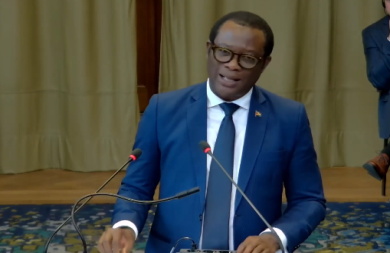
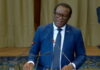
Foreign Affairs and International Cooperation Minister, Hugh Todd, who is leading the Guyana delegation, told the panel of ICJ judges that at stake is “more than 70 percent of our sovereign territory, which has been recognized to be an integral part of the country for more than 126 years, including the past 60 years since independence.
“The Essequibo, as this land is known in Guyana, is named for the Essequibo River, the largest and most remarkable in Guyana, which runs through it. For the Guyanese people, it is tragic even to think about having our country dismembered by stripping from us a vast majority of our land, together with its people, its history, its trade, and its customs. Watch video
Todd said that it is for this reason, and because Guyana is convinced of its right and entitlement to the territory under international law, and because of the fairness and scrupulous integrity of this court, that it has brought the matter before the ICJ.
Guyana brought the case before the ICJ in 2018, seeking confirmation that the 1899 Arbitral Award, which established the boundary between the two countries, is legally valid. The award had been accepted for over 60 years before Venezuela declared it null in 1962 and revived its claim to the territory.
The matter is being addressed under the 1966 Geneva Agreement, which outlines mechanisms for a peaceful settlement. After bilateral efforts failed, the dispute was referred to the ICJ by the United Nations Secretary-General.
The court has already ruled that it has jurisdiction to hear the case, paving the way for hearings on the merits, during which both sides will present full legal arguments.
The ICJ said that in the first round of oral presentations, lasting two sessions of three hours each, both Guyana and Venezuela will make presentations, and it will continue on Friday, ending on Monday next week.
The Essequibo region comprises roughly the western two-thirds of Guyana, spanning 61,600 square miles. It is a resource-rich region bordered by the Essequibo River to the east and Venezuela to the west, which Venezuela claims as its own.
In his presentation, Todd gave a historical overview of Guyana’s ownership of the Essequibo region, saying that the territory was recognized to be part of British Guyana, then a colony of Great Britain, by the award of a unanimous arbitral tribunal, consisting of five of the most eminent and highly respected jurists of that era, in October 1899.
“That award was a culmination of an exhaustive legal process which involved the submission of more than 5,000 pages of written arguments and documentary evidence, followed by a hearing that lasted more than three months and which involved more than 200 hours of oral submissions by distinguished legal counsel, and 54 sessions of four hours each.”
Todd said that all of this conformed with the terms of the prior written compromise, executed in the form of a treaty, the Treaty of Washington, in 1897.
“The case is also about Venezuela’s total and unreserved acceptance of that award, not least by the agreement of 1905, which faithfully implemented the boundary determined by the tribunal.
“For six decades, Venezuela fully respected and complied with that award and that agreement. Throughout that period, it never protested or challenged the award or the agreement. In fact, it was established and uncontested that Venezuela consistently respected the award and the agreement in practise, and that the boundary established by the award and the agreement was consistently reflected in V.”
Todd said that it is Guyana’s submission that the 1899 award is “without question legally valid and binding on the parties, and that the 1905 boundary agreement is legally valid and binding on the parties.
“It is Guyana’s submission that none of the arguments Venezuela has raised before and during these proceedings against the award or the agreement has any merit whatsoever, and that Venezuela’s challenges to the award and the agreement are, in any event, decades, no, a century too late to be raised as a matter of international law.”
Todd said the inevitable consequence is that the international boundary described in the 1899 award and demarcated in the 1905 agreement is, in fact, and has been for more than a century, the lawful border between Guyana and Venezuela.
“Venezuela is obligated under international law to accept and respect that border, and to refrain from any activities that infringe on the territory across that border, which constitutes Guyana’s sovereign territory.
“This is a historic moment. This is a moment of truth for Guyana and for Venezuela. More than eight years have passed since Guyana filed its application commencing these proceedings. We have now arrived at the final stage, the oral hearings on the merits, after which the court will deliberate and issue its judgment on the validity of the 1899 award and the course of the international boundary between Guyana and Venezuela.
“We have arrived at this historic moment despite Venezuela’s persistent efforts to stop us from getting here. First, it objected to the court’s jurisdiction on the basis of a strained and untenable reading of the 1966 Geneva agreement, which the court soundly rejected in its judgment of 18 December 2020. Then, it objected to the admissibility of Guyana’s claims.”
Todd said that the ICJ again resolutely rejected this effort in its judgment of April 6, and that Venezuela, unable to derail the case, decided to take matters into its own hands.
He said that in late 2023, it purported to stage a so-called national referendum, seeking popular support for rejecting the court’s jurisdiction and disassociating itself in advance from any judgment the court might issue on the merits of the case.
Todd said the referendum called for endorsing Venezuela’s assertion of sovereignty over Essequibo and for formally incorporating it into Venezuela.
He said that on December 1, 2023, the ICJ, acting on Guyana’s request, indicated provisional measures prohibiting Venezuela from taking any of these steps pending the final judgment in the case.
“Venezuela proceeded to do exactly what the court ordered it not to do. It issued executive decrees, followed by national legislation rejecting the court’s jurisdiction, including any judgment that might be forthcoming, and formally incorporating the Essequibo into Venezuela.”
Todd said last year that, after Venezuela announced it would hold elections in the Essequibo to choose a governor and a legislative assembly for the territory, the court issued another provisional measures order prohibiting that intended activity.
Todd said that Guyana is “extremely grateful” for the actions the court has taken thus far, adding “we know that these rulings were based on the court’s faithful application of international law, nothing more, and that Guyana has suffered and continues to suffer greatly from Venezuela’s unlawful claim and threats to the majority of our territory.
“This has been a blight on our existence as a sovereign state from the very beginning. It has been a threat to our peace and security, exacerbated in recent years by the growth of Venezuela’s military activities, construction of new bases, new airfields, and its deployment of aircraft, heavy weapons, and troops to the border area.
“Venezuela’s intentions are unmistakable as revealed in the executive decrees and national legislation …the acquisition of our territory and its incorporation into Venezuela. Facing a larger and more powerful neighbor’s designs on our territory has not only threatened our peace and security, but it has also held back our development.”
Todd said that the international community supports Ghana’s sovereignty and territorial integrity, including its title to all of the territory east of the international boundary, as defined in the 1899 award and the 1905 agreement.
“But economic development has been slowed by Venezuela’s claims and its threats. Foreign investors, in particular, have been reluctant to risk their capital in such circumstances, and the result has been far too little investment.
“For Guyana, which acceded to the 1966 Geneva agreement upon its independence, it has taken 60 years to reach this climactic moment, and to be in a position to obtain a final, definitive, and binding judgment from the world’s highest judicial authority on the validity and permanence of the 1899 arbitral award and the boundary that it established,” Todd told the ICJ.
Download video – Hugh Todd, Foreign Affairs and International Cooperation Minister








 and then
  that its case with Guyana over the ownership of the Essequibo region, "has an existential quality")