
































WASHINGTON, CMC – The International Monetary Fund (IMF) has approved the third review of Haiti’s Staff-Monitored Program (SMP), including the authorities’ request for an extension through June 19, 2027.
SMPs are informal agreements between country authorities and the IMF to monitor the implementation of the authorities’ economic program and build a track record of policy implementation that could pave the way for financial assistance from the IMF’s upper credit tranche (UCT).
The IMF said Haiti’s SMP is tailored to its context of acute security challenges, institutional fragility, and capacity constraints. It supports the authorities’ priorities of economic stabilization, improved governance, anticorruption, and strengthening the social safety net.
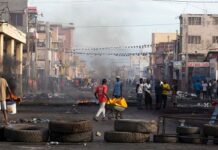
The Washington-based financial institution said Haiti continues to face a severe humanitarian and security crisis, compounded by recurrent shocks and a fragile political transition. Gangs continue to undermine state authority, leaving approximately 5.7 million people facing food insecurity and 1.45 million people internally displaced.
It said that the oil price shock stemming from the war in the Middle East has emerged as a major headwind, significantly raising the fuel import bill and implicit subsidy cost, and aggravating an already weak fiscal position.
The IMF said that these pressures add to the impact of Hurricane Melissa in October 2025, which disrupted economic activity and exacerbated humanitarian needs.
Haiti is also navigating a fragile political transition that is expected to culminate in general elections later this year—the first in a decade. The UN-supported Gang Suppression Force began arriving in April 2026 and is expected to be fully deployed by October 2026, which could help restore security and support recovery.
The IMF said that economic conditions remain dire. Real gross domestic product (GDP) contracted for a seventh consecutive year in financial year 2025, and a further contraction is expected in financial year Y2026.
Inflation has eased recently but remains elevated. Against the backdrop of weak economic activity and heightened uncertainty, financial intermediation has continued to contract. Retrenchment in bank lending and financial disintermediation have contributed to improvements in non-performing loan ratios, while capital adequacy ratios remain well above regulatory minimums.
The IMF said that despite a deteriorating external environment, international reserve buffers remain adequate. It said higher international oil prices are weighing on the external position, but strong remittances partly offset these pressures.
The current account is expected to weaken in the financial year 2026 but will remain broadly balanced. Gross international reserves are projected at US$3.4 billion at the end of the financial year, over seven months of prospective imports of goods and services. The nominal exchange rate has remained stable.
The IMF said that fiscal policy remains constrained by persistent security challenges, institutional weaknesses, and limited policy space.
“Revenue performance in FY2026 has been weak, due to disruptions to economic activity, administrative fragilities, and institutional paralysis triggered by the termination of the Transitional Presidential Council’s mandate.
“Higher international oil prices are expected to add further pressure through higher implicit subsidy costs, despite the authorities’ decision to increase domestic fuel prices in April,” the IMF said, adding that budget execution has remained uneven, underscoring the importance of prioritizing spending while safeguarding support for the most vulnerable.
It said that risks to the outlook are tilted to the downside.
“A further deterioration in security conditions, together with persistently higher global oil prices, could further strain economic activity, aggravate humanitarian conditions through higher food prices, and intensify fiscal pressures. Potential shifts in foreign immigration policies could slow remittance inflows, with adverse implications for the external position.”
The IMF said that while security remains the top priority, the SMP will continue to emphasize strengthening governance and reducing corruption, noting that these are critical to rebuilding trust in public institutions and overcoming fragility.






 and then