































PORT OF SPAIN, Trinidad, CMC – The Concerned Muslims of Trinidad and Tobago have criticized the decision of the Kamla Perrasad-Bissessar government to officially designate three Middle Eastern paramilitary and political organizations as terrorist entities, triggering an immediate freeze on any Trinidad and Tobago assets linked to the groups.
The group’s public relations officer, Imtiaz Mohammed, told the Trinidad Guardian newspaper that the move by the government raises “serious concerns” about bias and timing, arguing that it also risks reinforcing stigma against Muslim communities locally and internationally.
Mohammed questioned why the applications are being pursued now, pointing to ongoing national concerns, including crime levels and the effectiveness of the state of emergency (SoE).
Mohammed said Trinidad and Tobago is aligning itself with the foreign policy positions of the United States and Israel, linking the legal action to wider geopolitical tensions in the Middle East.
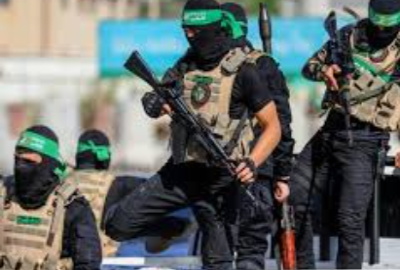
The High Court here has also ordered the freezing of all local property associated with Hezbollah, Hamas, and the Islamic Revolutionary Guard Corps (IRGC) under provisions of the Anti-Terrorism Act.
The orders, published in the Trinidad and Tobago Gazette on April 13, were issued by High Court judges between April 8 and 9 and require ongoing six-month reviews by Attorney General John Jeremie.
According to the Gazette, Justice Carol Gobin issued freezing orders on April 8 in relation to both Hezbollah and the IRGC. A separate order issued by Justice Jacqueline Wilson on April 9 listed Hamas as a declared entity.
The High Court orders directed that all property owned or controlled locally by the three organizations, whether wholly, jointly, directly, or indirectly, must be immediately frozen. The measures also apply to assets held through intermediaries or proxy arrangements.
The publication in the Extraordinary Gazette signals the formal legal activation of the orders, making them enforceable across all financial institutions, property registries, and relevant regulatory bodies within Trinidad and Tobago.
The move places Trinidad and Tobago within a tightening global framework targeting terrorist-financing networks, particularly those identified by international bodies such as the United Nations Security Council under Resolution 1373 and monitored through Financial Action Task Force (FATF) compliance mechanisms.






 and then