





































CARTAGENA, CMC – The Economic Commission for Latin America and the Caribbean says that regional Treasury, Economy, and Finance Ministers and high-level officials have approved the creation of a Regional Tax Cooperation Platform.
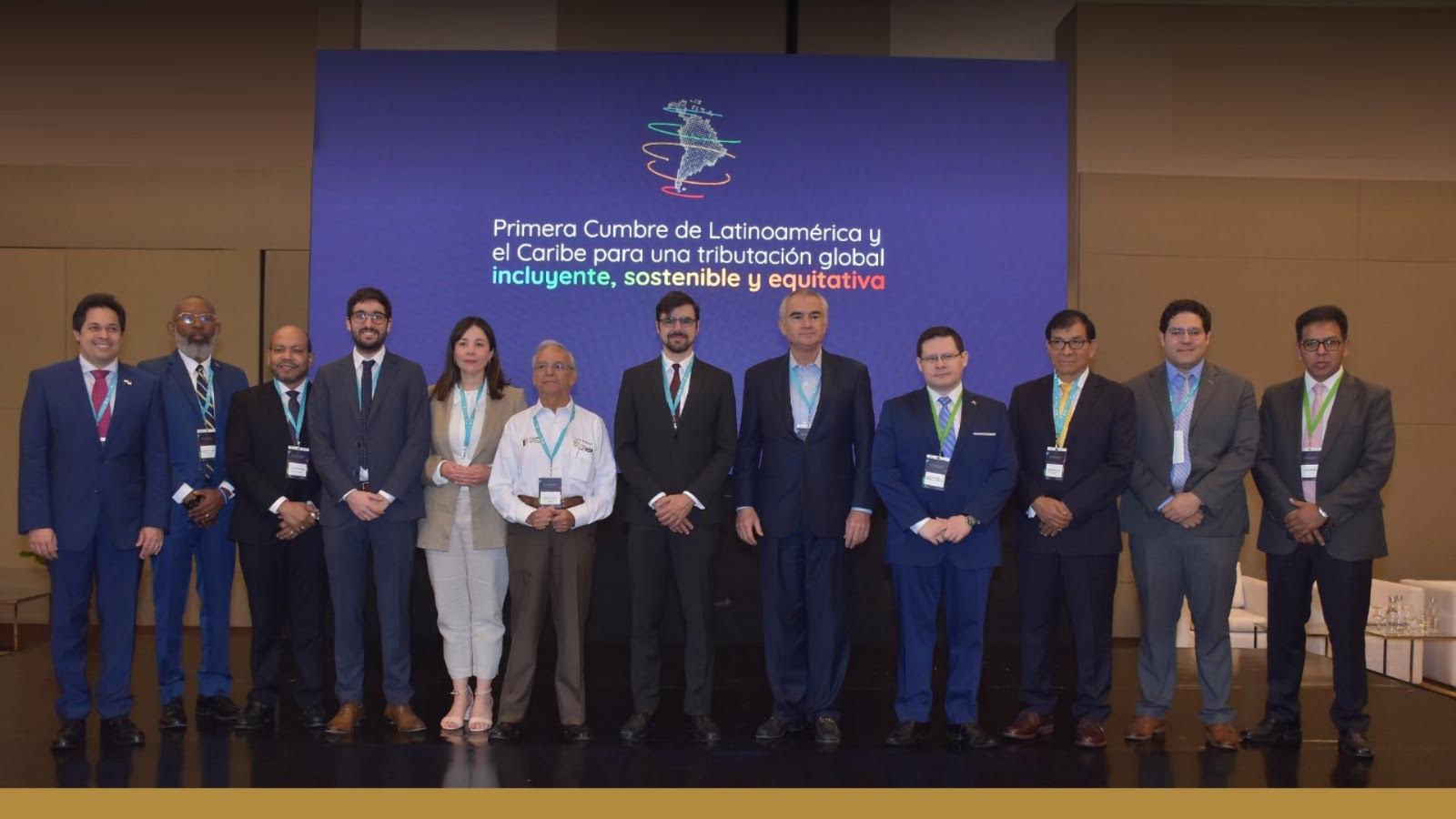
ECLAC said that delegates, who gathered here for the First Summit for an Inclusive, Sustainable, and Equitable Global Tax Order, have signed a joint declaration supporting this new forum for dialogue and exchange for which ECLAC will act as technical secretariat.
According to ECLAC, 16 regional countries approved the instrument establishing governance of the Regional Tax Cooperation Platform for Latin America and the Caribbean, the primary outcome of the First Latin American and Caribbean Summit for an Inclusive, Sustainable, and Equitable Global Tax Order that ended on Friday.
The summit – organized by Colombia’s Ministry of Finance and Public Credit and promoted by the governments of that country, Brazil and Chile, with from ECLAC – “seeks to create a permanent forum for tax coordination” between regional countries that can become “a space for discussing the tax matters affecting the region’s countries,” ECLAC said.
In the declaration, ECLAC said, “The signatory countries affirm their commitment to generating knowledge, sharing experiences, contributing to the forging of shared positions and non-binding concrete solutions that would guide ministerial decision-making in addressing the region’s tax policy challenges.
“Furthermore, they seek to build in a participatory way and through consensus a space for integrating Treasury, Economy and Finance ministers to foster dialogue to ensure that international and regional tax policies be inclusive, equitable, environmentally and socially sustainable and favorable to growth, the reduction of inequalities and the achievement of the Sustainable Development Goals (SDGs),” ECLAC said.
In addition, it said regional countries “commit to contributing with analyses, exchanges and technical guidelines to member countries’ fulfillment of the SDGs, by international experiences and the needs of the region and each country.”
ECLAC said delegates also welcomed “the voice and contribution of academia, civil society, the business sector, and multilateral organizations in sharing their knowledge, contributing ideas, and identifying unresolved problems and potential solutions on matters of taxation.”
In the document, ECLAC said the countries support the new body’s pro tempore Presidency being held by Colombia for the next 12 months and thanked ECLAC for serving as the platform’s Technical Secretariat.
“Fiscal policy must be devised and designed in a way that makes the requirements of short-term stability compatible with those of long-term growth and well-being,” said ECLAC’s Executive Secretary José Manuel Salazar-Xirinachs, who actively participated in the debates of the First Latin American and Caribbean Summit for an Inclusive, Sustainable, and Equitable Global Tax Order.
“The region needs a profound revision of its fiscal compacts based on frameworks of public finance sustainability but centered on a combination of increased permanent revenue and improved quality and allocation of spending. Both elements are essential for moving forward on transforming development models into more productive, inclusive, and sustainable ones,” he added.








 and then