








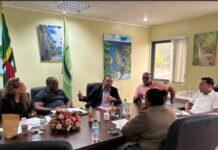
























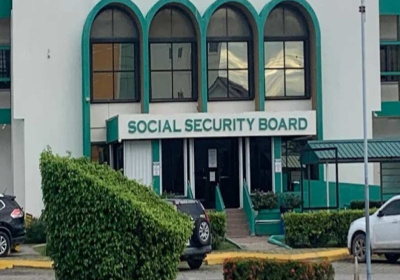
BELMOPAN, Belize, CMC – The Social Security Board (SSB) says it has invested more than BDZ$130 million (One BDZ$=US$0.49 cents) so far this year into major real estate projects. The SSB said that the two biggest drivers of those investments were Hydro Belize shares and bonds.
“So from January one to April 30th, we have now invested an additional BDZ$130 million for 2026 alone. We have never done that number in any year,” said SSB general manager of finance and investment, Leo Vasquez.
“The hydro Belize equity is really our share investment. We have invested BDZ$1.4 million in Hydro Belize shares. And we have invested BDZ$42.5 million at six per cent in Hydro Belize bonds.”
Hydro Belize replaces Fortis, a diversified leader in the North American regulated electric and gas utility industry that came out to the market in Belize, with Vasquez saying the move “presented an opportunity for us, where the power, where energy is the source, not the distributor.
“But this is when Hydro Belize funds 100 percent or supplies 100 percent of its energy to BEL (Belize Electricity Limited). So the 1.4 million-share investment will give us 30% ownership of two board seats. And of course, then the 42.5 is a 6% year-on-year return.
“And then we get the 42.5 back at the end of the 20 years, unlike the share investment. We expect this because it is expected to earn about $4 million in dividends per year. And we plan to keep that for a lot longer than 20 years,” he added.
In the meantime, after weeks of nationwide consultations, the SSB is reportedly examining a major shift in how contributions are calculated. The proposal would move away from fixed wage bands to a percentage-based system, while also raising the minimum contribution.
Officials say the talks, held with government, unions, employers, and workers, are part of a broader effort to modernize the system.
“The feedback is showing us that, ideally, administratively having one band, one floor, ceiling, and one rate administratively is the most efficient. We also recognize that the BDZ$130 is not going to then be for full-time employees, because there’s nobody who’s going to be working for a 40-hour work week at a minimum wage of five dollars that’s going to be earning DEZ$130,” said the chief executive officer of the CCB, Jerome Palma.
“So we do recognize by legislation that those persons who are part-time working several hours can participate. Based on the numbers we have in the band system, we recognize 130 as perhaps an ideal point. It was not rigid in that sense, but we recognize where 130 was a bit of the sweet spot, if I could call it that.”
SSB says the current wage-band system creates additional paperwork and calculations for both businesses and the board. In fact, Belize is one of only four countries in the world still using this system.
However, the initial proposal suggested a flat percentage base across all incomes. The suggested percentage splits are shown, with the initial lean towards the Caribbean Community’s (CARICOM) standard of 5.41 percent by employers and 4.59 percent by employees.
“The feedback is guiding us that there is still a hope that we have at least three tiers for the lower income, where the employer is contributing at a higher rate than at the higher income, and then somewhere in between. So that’s a lot of the feedback.
“That’s why we’ve gone through the consultation process. That is what the results are showing us, that there’s still an expectation that at least three tiers, a low income, a high income, and then somewhere in between. So that we will now factor in, in terms of determining what our final proposal will start to look like,” Palma added.









 and then
  says it has invested more than BDZ$130 million (One BDZ$=US$0.49 cents) so far this year into major real estate)