



































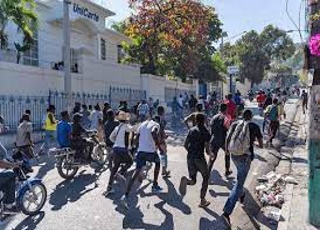
WASHINGTON, CMC – The Inter-American Commission on Human Rights (IACHR) says it remains concerned at the upsurge of violent attacks in the French-speaking Caribbean Community (CARICOM) country of Haiti.
In its annual report released here, the IACHR, an autonomous body of the Organization of American States (OAS) said that it has taken note of the National Security Council (CNS), and supports the country’s commitment to reducing insecurity which led to the adoption of the Roadmap for Stability and Peace in Haiti by the OAS General Secretariat.
“Additionally, the IACHR notes with concern the rise of armed citizen brigades participating in violent confrontations. The Commission further reiterates its concern about the persistent increase in the number of internally displaced persons in the framework of the Haitian multidimensional crisis.”
The IACHR said regarding democratic institutionality that it has taken note of the submission by the Provisional Electoral Council (CEP) to the Transitional Presidential Council (CPT) of a full electoral calendar, setting August 30, 2026, as the date for the first round of elections.
“The proposed timeline outlines a 41-step plan through February 2027. The Commission values that the CEP, the organ responsible for upcoming elections, has already taken several actions to prepare for the electoral vote, such as registering more than 200 political parties, assessing voting centers, and recruiting members of the Departmental Electoral Offices.”
The IACHR said that it has also taken note of the decision of the CPT to propose a referendum for a new Constitution that was scheduled to be held in 2025 to address governance challenges, even as Haiti’s 1987 Constitution “explicitly prohibits referendums as a means of amendment.
“In light of this situation, there were concerns regarding the legitimacy of such an operation as well as the level of security needed to ensure a reliable voting process,” it said, quoting a member of the Venice Commission of the Council of Europe, who said that a climate of security is essential if elections are to comply with international standards.
Regarding human rights, the Commission notes Haiti’s contribution in the adoption and implementation of the OAS’ Roadmap for Stability and Peace, which offers a “political and operational framework to coordinate concrete solutions with the Haitian authorities and align efforts among multilateral and regional partners”.
The IACHR said that this initiative is focused on immediate measures to secure key corridors and infrastructure, rebuild the Haitian National Police, reform the justice system, dismantle transnational criminal economies, and address the need for political legitimacy alongside security.
It is also intended to support the CEP and the National Identification Office (ONI) to guarantee free, fair, and transparent elections.
“However, as Haiti faces a worsening humanitarian crisis, its capacity to guarantee the effective enjoyment of basic human rights is hindered by funding insufficiency, as it was operating with only nine per cent of the US$908 million required for its humanitarian needs,” the IACHR said.
On the issue of citizen security, the IACHR welcomes the CNS aimed at addressing security needs and fulfilling Haiti’s obligations following the ratification of the accord.
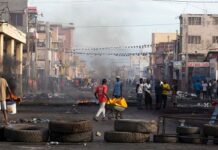
But the Commission said that it reiterates its concern regarding the context of insecurity and generalized violence that has deteriorated throughout the year in the country, with the data published by the Bureau Intégré des Nations Unies à Haiti (BINUH) indicating that 4, 384 people had been killed during the first nine months of last year.
“The BINUH reports indicate that armed gangs expanded their territorial influence in the metropolitan area of Port-au-Prince and its surroundings during the first quarter, particularly in the communes of Kenscoff and Delmas.
“However, gang territory progression in the capital stalled in the second and third quarters. Additionally, large-scale attacks in the Center department were carried out, aiming to gain control of the roads leading to the Dominican Republic.”
The IACHR said that in this context, through the first three quarters of last year, the proportion of killings attributable to armed gang attacks fluctuated from 35 to 24 to 30 percent; those happening during security operations increased from 56 to 64 percent before decreasing to 61 percent. Those attributed to self-defense groups rose from 9 to 12, then returned to 9 percent.
The IACHR said that last December, it had expressed its extreme concern regarding the persistence and worsening of sexual violence against women, girls, and adolescents. It said that although sexual violence continues to go unreported due to fear of reprisals, at least 1,000 sexual violence cases, including gang rapes and cases of sexual slavery, were documented between January and June 2025, particularly in areas controlled by armed groups.
“As reported during a thematic hearing on impunity for sexual violence against women and girls in Haiti, these acts occur in contexts characterized by the absence or limited presence of the State; they are deliberately directed against women and girls as an expression of gender discrimination and as a means of territorial and population control.”
The IACHR said that access to justice continues to face important challenges as the Port-au-Prince Court of First Instance, which closed in February 2023, has reopened in a new space, but, according to the Institute for Justice and Democracy in Haiti (IJDH), “it remains virtually nonoperational because the new location lacks the space, security, and equipment for effective court function.
“In addition, it is a matter of concern that three of the country’s 18 courts of first instance did not hold any criminal hearings in 2024, while severe staffing shortages across the country further strain judicial function, with several courts at risk of having to close entirely and frequent strikes by court personnel exacerbating these shortcomings.”
The IACHR said it is further concerned about the CPT’s proposed constitutional amendments that would eliminate term limits for certain judges and limit the power of the judiciary’s oversight body, threatening to undermine the judicial sector’s integrity even further.
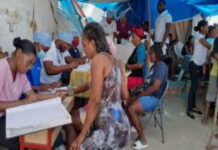
“Finally, the Commission is concerned about the situation caused by the identity document crisis. Thousands of citizens have fled their homes without identity documents or have lost theirs in fires, and access to Government services responsible for issuing those documents has dramatically decreased.
“Certain people have been intercepted without documents by self-defense groups and treated as gang members with public executions by self-defense groups recorded following the failure to identify,” the IACHR added.









 and then
  says it remains concerned at the upsurge of violent attacks in the French-speaking Caribbean Community (CARICOM) country of Haiti)