


































UNITED NATIONS, CMC—The Biden administration has announced an additional US$160 million for the Haitian people’s development, economic, health, and security assistance.
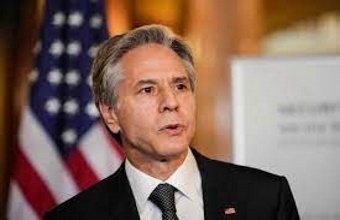
The US Department of State said Secretary of State Antony Blinken announced on Wednesday while hosting an event on the margins of the 79th Session of the United Nations General Assembly Debate.
During the meeting, dubbed “Building on Progress to Address Security in Haiti,” Blinken said the aid brings the total foreign assistance from the United States to Haiti since Fiscal Year 2021 to over US$1.3 billion.
He also announced the United States “designation of Prophane Victor, for his role in forming, supporting, and arming gangs that have engaged in serious human rights abuse and Luckson Elan, for his involvement in serious human rights abuse related to gang activity in Haiti’s Artibonite department.”
“The United States supports the Haitian people and their aspirations for a peaceful and democratic Haiti,” said Blinken at the meeting he hosted with US Ambassador to the United Nations Linda Thomas-Greenfield.
The State Department said the meeting highlighted the progress the Haitian National Police is making in restoring security in Haiti with the support of the Kenyan-led Multinational Security Support (MSS) mission.
“The Secretary reiterated the critical importance of additional and sustained international support for Haitian-led efforts and the MSS mission,” the State Department said. “Participants discussed the status of contributions from the international community, timelines for further personnel deployments, and options for the sustainability of the MSS mission, including the potential transition into a UN Peacekeeping Operation in the future.”
The State Department said Haitian Prime Minister Garry Conille, Haitian Transitional Presidential Council President Dr. Edgar Leblanc Fils, and critical partners, including Kenya, Canada, France, and members of the Caribbean Community (CARICOM), “discussed the resources and funding needed for the mission and welcomed further contributions from participating countries.”
In his opening remarks, Blinken thanked participants for “standing with Haiti, for standing with the Haitian people.
“President Leblanc, Prime Minister Conille, thank you very much for your vision, leadership, and resolve on behalf of the Haitian people,” he said. “To our Kenyan friends in particular, thank you for working alongside us and shoulder-to-shoulder with the Haitian people by taking charge of the Multinational Security Support mission.
“We’re glad that President Ruto (of Kenya) could visit Port-au-Prince on his way to New York and see this critical partnership firsthand,” Blinken disclosed. “And we especially appreciate his announcement that 600 more Kenyan police will deploy to Haiti in the coming weeks.
“When we gathered here last year, the situation in Haiti could not have been more urgent,” he added. “But no matter how challenging this crisis was, we knew we could not afford to lose hope or determination. We could not stand by and watch more kidnappings and killings, more sexual violence, more hunger, more suffering. So, we came together to help our Haitian partners, friends, and neighbors in their need.
“Thanks to the Haitian-led political transition the Caribbean Community and the United States helped facilitate in March, Haiti has a prime minister, a Transitional Presidential Council, and a cabinet,” continued Blinken, noting that, last week, the Haitian Government named seven of nine members of the Provisional Electoral Council, stating that this is “a critical step toward free and fair elections.”
The US Secretary of State said the Multinational Security Support mission – authorized by the United Nations Security Council – provides “crucial support to the Haitian National Police as it establishes an essential foundation of security.”
He said over 380 Kenyan personnel are on the ground in Haiti and that the first CARICOM contingents—from Jamaica and Belize — arrived in the past several weeks.
Blinken said he anticipates the arrival of more personnel from Jamaica and the Bahamas who will be deployed to Haiti.
He extended “a special thanks to Jamaica for its leadership as the mission’s deputy commander.”
Blinken said several other partners have also made significant contributions – “Canada in particular, as well as France, Spain, Türkiye and Italy.”
He said the Haitian National Police (HNP) and MSS are already conducting “increasingly sophisticated joint operations and patrols.
“These operations have strict measures in place to uphold human rights and ensure accountability for transgressions,” he said. “Greater security has enabled Haitians to slowly return to more normal daily routines. The airport has reopened for commercial flights; police have retaken the main hospital, where Prime Minister Conille trained as a young doctor; vendors are back on the streets; along Boulevard Toussaint Louverture, you can see people dancing to the Haitian Kompa on the radio.”
Blinken noted that he traveled to Port-au-Prince, the Haitian capital, earlier this month, as Ambassador Thomas-Greenfield did earlier this summer, and that “immense challenges remain—ongoing violence and displacement, grinding poverty, political infighting.
“But I also witnessed the many positive forces in motion,” he said. “Today, we have a chance – a chance to build on this foundation of security, to build on this progress, to build on a renewed sense of hope.
“The United States is committed to doing our part – both to address immediate needs and to invest in Haiti’s long-term success,” he added. “We remain the largest contributor to humanitarian aid, including US$45 million in additional support, which I announced while in Haiti. We’ve already delivered over US$300 million to support the Multinational Security Support mission – armored vehicles, radios, night-vision goggles, drones.”
Blinken also urged the renewal of the mission’s mandate in Haiti, which expires in “a few short days.
“And we need to consider how to sustain this mission over the long term – to provide for the predictable funding and deployment of personnel – in a way that has the continued support and trust of the Haitian people,” he said. “When I met with the Kenyan commander, Otunga, the head of the multinational mission, he told me, and I quote, ‘We were deployed here to support our brothers in Haiti. We cannot wait.’
“Neither should we,” Blinken added. “Haiti’s security, democracy, and future depends on the actions we take together, including the actions we take today.”
Speaking via an interpreter, Dr. Lebanc Fils said, “Haiti is undergoing a multi-dimensional crisis that is political, social, and particularly in matters of security,” stating that “for the past three years, Haiti has been facing attacks from bandits, armed gangs who occupy 80 percent of the capital of Haiti, Port-au-Prince. And a good part of the Department of the West, efforts have been made, and progress has been made since April.
“After the consensus found with the cooperation of the Caribbean Community on March 11th, we created a Transitional Presidential Council. We chose a prime minister; we have a national government in place,” he added. “And despite our differences, we’ve been able to work to put in place recently a committee – a Provisional Electoral Council.
“We need only two more to complete that council, and measures have already been taken to create the committee that will ensure the national conference that will help us to reform the constitution that will lead to democratic elections that should take place – that shall take place at the end of 2025 so that at the beginning of the year 2026 we can pass power to a democratically-elected government,” Dr. Lebanc Fils continued.
But he warned that this would only be done if we arrived to deal with the security issues.
“Thanks to the international community – and particularly with the support of Kenya, who leads the MMS – efforts have been made in that direction,” he said. “And indeed, we can hope that we will be able to organize elections to the extent that this mission can be reinforced with funds estimated for its deployment.”
Leblanc Fils thanked the US Government, “who to date has greatly contributed to the fund for the support of security, but we expect contributions from our friends to allow us to solve problems of security and bring the country back to normal functioning and democracy through elections.”
Conille expressed his gratitude “first and foremost to our brothers and sisters from Kenya and Jamaica, who have deployed very impressively.
“They have not waited to be at full capacity,” he said. “They felt the need, and they immediately began to work with the police force to see how they can find solutions that can relieve the pain and suffering of the Haitian people.
“The level of commitment and engagement has been awe-inspiring,” he added. “And you can feel even slow improvements in the streets of Port-au-Prince, but most importantly, you’re starting to see hope again, and that’s highly, extremely encouraging.
“There is a sense of urgency because the Haitian people are watching this with cautious optimism,” the prime minister added. “This is a very serious situation that requires urgent support. And it’s very, very important that we all come together to make sure the police and the multinational force have the resources required to intervene in the most effective and urgent way possible. We worry that without everyone’s urgent commitment to support this effort, we will lose the little success we’ve obtained at a huge price.”
In his address, delivered by Chef de Cabinet Courtenay Rattray, UN Secretary-General Antonio Guterres said, “The crisis in Haiti is a protracted human tragedy with a long and well-known history.
“It is one of the most disastrous humanitarian situations in the world,” he said, stating that the international community has “a responsibility to step up to support the Haitian people in their efforts to restore stability.
“Recently, we have seen some progress in putting transitional governance structures in place – a vital step on the way to inclusive democracy and the rule of law,” Guterres added. “But the Haitian people are still subjected to egregious human rights abuses by gangs. Young women and girls continue to suffer appalling levels of sexual violence and abuse.”
During the first half of this year, he said the United Nations documented 3,638 homicides — an increase of nearly 74 percent over 2023.
Despite the imposition of the arms embargo in October 2023, Guterres said gangs and other non-state actors continue to procure arms and ammunition illicitly.
He described the first deployments of the Multinational Security Support mission as “a positive step,” commending Kenya for its leadership and the countries that have pledged to contribute personnel, equipment, and necessary logistical resources.
The UN Secretary-General also commended countries that have contributed to the Trust Fund for the mission, which the Secretary-General established in accordance with the Security Council’s request.
Guterres said while the fund now stands at US$85.3 million, it “remains inadequate,” urging “all those who have made financial commitments to deliver on them urgently.
“We must keep working to mobilize sufficient resources for the mission and for the humanitarian response in Haiti,” he said, disclosing that close to 703,000 people have been displaced and more than 5 million Haitians are food insecure – almost half of the population.
Guterres also said resources are urgently needed to support humanitarian efforts.
He said the Humanitarian Needs Response Plan for Haiti, totaling US$674 million, is currently only 39 percent funded.
The UN chief said a “durable solution” to the current crisis can only come from a political process that restores democratic institutions through elections.
“Improving security is crucial to creating the conditions necessary for these elections,” he said. “The UN will not waver in its commitment to Haiti. We continue to support the transition process, which aligns with the mandate of our current mission, BINUH – the UN Integrated Office in Haiti.
“I also welcome CARICOM’s support to the Haitian-led efforts and its cooperation with BINUH,” he added. “Like people everywhere, Haitians demand and deserve to live in dignity, free from the threat of violence.”








 and then