













PORT OF SPAIN, Trinidad, CMC -The Trinidad and Tobago government says it has received the support of more than 100 countries, including those in the Caribbean Community (CARICOM), for a non-permanent seat on the United Nations Security Council next year.
The vote is expected to take place in June at the United Nations General Assembly, and CARICOM and Foreign Affairs Minister Sean Sobers told the Senate on Tuesday evening that Port of Spain will officially launch its campaign in May, after a soft launch earlier this year.
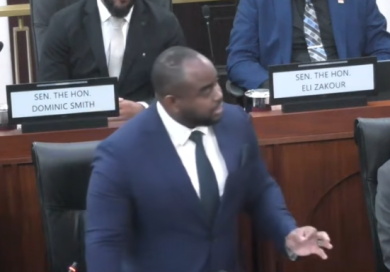
“Mr. President, based on the time, I would also want to indicate that we do have CARICOM support as it pertains to this particular. We also have global support of over 100 UN member states, including regional groupings,” Sobers told the Senate as he contributed to the debate filed by his predecessor, Dr. Amery Browne, on the issue.
“I would like to place squarely on the record that Trinidad and Tobago stands on a strong building blocks of cordial bilateral relations and this country has continued to maintain warm relations with our partners, whether it be from the Orient of the Far East, the dunes and rich cultural history of the Middle East, the Romanesque and Gothic designs of Europe, to the great plains of the Americas and lastly, but certainly by no means least, the warmth of the Caribbean and Latin America.”
Sobers said that Port of Spain has adopted a policy of concretising new long-lasting friendships, adding that “it is for this reason that Trinidad and Tobago is steadfast and confident in its goal of being elected to a seat under the United Nations Security Council as a non-permanent member for the period 2027 to 2028, at the elections to be held during the 80th session in June 2026,” he said.
Earlier, Browne, who served in the previous People’s National Movement (PNM) administration that left office in April last year, told the Senate that he was pleased that the current administration had agreed to follow through on the last government’s position regarding the non-permanent seat on the United Nations Security Council for the period 2027 to 2028.
He said before the last general election, the Trinidad and Tobago government had presented at a meeting of CARICOM foreign affairs ministers a support request “based on our vision and ethos and principles that we would adopt at the Security Council if we got CARICOM’s support.
“And we did achieve a CARICOM endorsement of the Trinidad and Tobago campaign with the understanding that we would take the voice of CARICOM with us to the United Nations Security Council”.
He said as far back as 2013, Trinidad and Tobago had signaled to the Group of Latin America and the Caribbean (GRULAC), a non-binding United Nations regional dialogue group composed of 33 member states from Central/South America and the Caribbean, “ a placeholder intention to seek election for the 2027-2028 period.
“That is the accurate record between the two administrations,” Browne said even as he warned of the country’s new direction in its foreign policy under the Kamla Persad-Bissessar administration.
“In our opinion, this world does need small islands because it needs our voice, our unique voice, our sovereign voice, our principled voice, even at the level of the United Nations Security Council.
“It needs us to be brave, it needs us to be clear, it needs us to be principled, it needs us to defend sovereignty, not be mere vassals of another voice It needs us to have our unique voice, to carry the voice of CARICOM, to carry the values of CELAC, to carry the values of the OAS into corridors where the others may not have access.”
Browne said that such a voice is needed to speak for the victims of war, not for the perpetrators of war.
“To speak for the victims of apartheid and genocide, not for the perpetrators. This is not anti-any-nation, Mr. President; this is pro-justice and pro-humanity. Mr. President, if we can agree that blessed are the peacemakers, we have the opportunity to be blessed as peacemakers. “We must acknowledge the need to approach a seat at the United Nations Security Council to carry a strong anti-war and pro-international law agenda, not the other way around.
“Mr. President, our voice at the Security Council, which we support and we want to succeed, that voice will be wasted and squandered if it is a voice of geopolitical convenience.
“Our voice must be the voice of international peace, of the universal application of international law, without any carve-outs for big powers. Mr. President, the only reason we should be there at this highest forum for international peace and security is if we sincerely want to make the world a better place. That’s the only reason,” Browne told legislators.
But Sobers defended the government’s foreign policy positions, saying, for example, with respect to its relations with the United States, ”we make no apology as it pertains to our relationships with the United States.
“Adopting a position against narco-terrorism and narco-trafficking, condemning it at the strongest possible multilateral event such as the United Nations General Assembly, what could be wrong with a position like that?
“Are we to then be on the opposite side and say, yes, we have no problem with a plethora of drug boats coming into the country? We have no problem with a plethora of guns coming into the country. And so to say then that we support the US’s military intervention to deal with those things, things that have been perpetrated for 10 years under the previous administration, I could see absolutely nothing wrong with that as a position,” Sobers said in his apparent reference to Washington’s military build up inn the Caribbean that resulted in the deaths of several people, Trinidad and Tobago nationals included in the fight against the illegal drugs trade.
Washington had also denied that its military presence in the Caribbean had to do with regime change in Venezuela. Still, after invading the South American country and detaining President Nicolas Maduro on alleged drug-related charges before a US court, the US has significantly diminished its presence in the Caribbean Sea.
Sobers said with respect to SIDS, Trinidad and Tobago is quite aware as to what responsibility ”we have being a small island state, being an advocate for SIDS on the whole and in general, and we will continue to do that as a member of the non-permanent Security Council”.
He said any talk that is being peddled about apartheid and genocide falls flat, given it was Prime Minister Persad-Bissessar, who in her first term had brought to CARICOM ”discussions on reparations”.
Browne said Trinidad and Tobago appreciates and recognizes the magnitude of the responsibility bestowed on the Security Council, and for small states like Trinidad and Tobago, the maintenance of an international rules-based order and security is of paramount importance.
“It is the government’s primary view that we can only be better together if we confront complex and evolving global issues head-on, instead of bearing our heads in the sand,” he said, adding that it is in this context that Trinidad and Tobago is committed to using its seat on the UNSC for the advancement of the interests of the people of Trinidad and Tobago, the region, and the wider international community.
“Once elected, we would ensure that the voices and perspectives of all states are meaningfully represented in the work of the Security Council,” he added.






 and then
 )