
































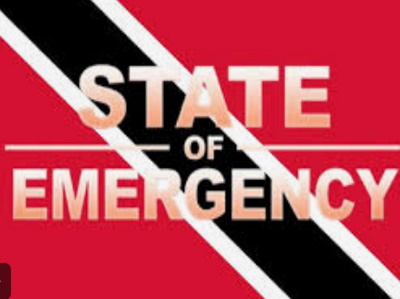
PORT OF SPAIN, Trinidad, CMC -The Trinidad and Tobago government late Friday night used its overwhelming majority in the Parliament to extend by a further three months, a state of emergency (SoE)that had been declared on March 3, following the end of a previous measure on January 31st, this year.
The motion to extend the SoE was passed by a 26-12 majority, with none of the opposition members of the People’s National Movement (PNM) supporting the measure, which they had earlier described as a continuous crime-fighting measure by the Kamla Persad-Bissessar administration.
Former prime minister Stuart Young said that “states of emergency are measures of last resort. States of emergency are all about suspending important constitutional rights, fundamental rights, the right of freedom of movement, the right of freedom of speech, and the right to due process”.
Young referred to a court judgement in Jamaica where the court there ruled that “states of public emergency by their very nature involve infringement of citizen’s rights” with Young adding that the court “went on to hold, that while we accept that the democratic rights may be limited or restricted to ensure public safety and to maintain public order the restrictions should be temporary so that affected rights are impaired as least as it is reasonably possible.
“It is unquestionable that the constitutional rights of members of certain marginalised communities will be disproportionately affected as there is an increase in policing of such communities. There is likely to be an erosion of public trust in government,” Young said, adding, “and that is happening right here in Trinidad and Tobago.
He said the Jamaican court ruled that there would be negative implications for social and economic stability, adding “that is the caution that is applicable here as it was in Jamaica”.
As he wrapped up the debate, Attorney General John Jeremie said the country is at war with criminal gangs and that the difference between the government and the opposition “is that we know we are at war with criminal gangs and we intend to fight that war until it is won.
“We will not stop in this fight against the criminal gangs which have held this country to ransom for a difficult and long decade. Our people are crying out for relief…and that is what we hear, we will fight for them,” he added.
The government had said that it had introduced the new SoE after warning of credible evidence linking criminal gangs and former detainees to increased crime in the country.
Meanwhile, the police say several suspects have been detained under preventive detention orders during the first 10 days of the ongoing SoE.
They said several people who were previously held during the previous SoE were again in custody, although exact figures were not disclosed, and that 373 people have been arrested so far under the latest SoE.
Deputy Commissioner of Police (Operations) Suzette Martin told reporters that 39 people had been held under preventive detention orders so far, with 16 of those detentions approved, and that investigators were examining possible gang links involving some detainees, including individuals who had been detained during the previous SoE.
“We are doing investigations in terms of gang activities, so at this point I cannot pronounce that they are gang leaders,” Martin said, adding that it was still too early in the emergency period to make definitive assessments.
She also disclosed that during the first 10 days of the SoE, the police conducted 943 operations nationwide, resulting in 66 charges being laid.
She also said that drug seizures included 720 grammes of cocaine, 230.58 kilogrammes of marijuana, 88 marijuana trees, and 1.45 grammes of ecstasy.






 and then