































PORT OF SPAIN, Trinidad, CMC – The Trinidad and Tobago government, on Wednesday, criticised the use of drones to acquire photos of “military installations and equipment,” noting “with great concern” drone activity in proximity to both the Piarco International Airport in Trinidad and the ANR Robinson Airport in Tobago.
In a statement, the Ministry of Defence, which said it is responsible “for securing our borders, including the airspace and territorial waters,” said it had taken note of “recent drone activity” near the two airports.
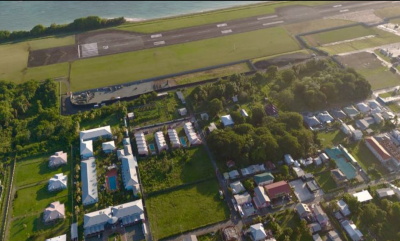
Earlier this week, the Trinidad Guardian newspaper published a photo that it said showed images of “several trucks and utility vehicles positioned within the restricted area, along with a small tent and another temporary structure located close to the equipment, suggesting use for operational or shelter purposes. Several portable toilets were also observed at the site.
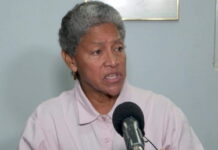
But Prime Minister Kamla Persad-Bissessar dismissed the suggestion that the image is that of a military base, saying the photo shows “support offices” for the US military radar system on the island.
While she did not explicitly describe the compound as a military base, Persad-Bissessar told the newspaper, “the picture is self-explanatory. There is a radar with the support offices to operate it.
Persad-Bissessar would later describe the newspaper and the prominent opposition People’s National Movement (PNM) as “appearing obsessed” with getting the “radar and the Americans out of the country,” saying that the only people who would benefit from such an outcome would be drug traffickers.
In its statement, the Ministry of Defence said that “objective verification shows drones were flown within the five-kilometer no-fly zone of our airports, contrary to claims made that the drones operated outside five kilometers from our airports.
“The Ministry of Defence wishes to highlight the reckless endangerment created by drone operators from the obvious and inherent danger posed to both incoming and outgoing commercial aircraft, during which drone operations with the real possibility of collisions, which potentially lead to loss of life on a massive scale.
It said quite apart from the obvious dangers posed, “the desire to obtain footage of military installations and equipment to disseminate the same to media houses and by extension the world at large, is inimical to national security interests and exposes the citizenry to those who would benefit from the use of such information to our detriment.
Last month, Persad-Bissessar defended her decision to withhold details about the installation of United States radar systems in Tobago, even as she criticised the previous administration for leaving Trinidad and Tobago’s borders “exposed.”
She had also dismissed suggestions that the US presence in Tobago was military in nature. “They are helping us with something to do at the (Arthur NR Robinson International) airport,” she said, pointing to work connected to a roadway near the airport. “It is not a military force as such. We are not about to launch any campaign against Venezuela.”
Persad-Bissessar has denied being part of the efforts by the United States to effect regime change in Venezuela, where Washington has accused President Nicolas Maduro of being a narco trafficker, a term the prime minister is now using to refer to the administration in Caracas.









 and then