





































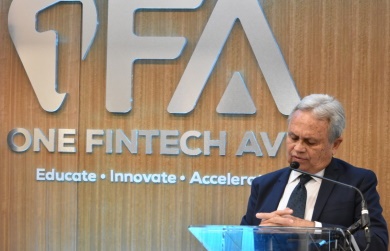
PORT OF SPAIN, Trinidad, CMC – Finance Minister Colm Imbert has welcomed the completion of the National Financial Inclusion Survey Report 2023, saying it provides a rich repository of data and findings to better understand the current state and local barriers to financial inclusion.
“The survey will allow us to substantially change the financial landscape for the underserved and unbanked in Trinidad and Tobago, who are at the center of our focus for this initiative,” Imbert told the survey launch.
The National Financial Inclusion Survey Report is an initiative of the Trinidad and Tobago International Financial Centre (TTIFC) in collaboration with the United Nations Capital Development Fund (UNCDF), the European Union, and the Ministry of Finance.
Imbert told the ceremony on Tuesday that considerable effort had gone into developing the survey instrument, which combined existing questions from the Organization for Economic Cooperation and Development (OECD), the International Network for Financial Education (NFE) Toolkit, and the World Bank’s Global Findex Survey with questions tailored explicitly for Trinidad and Tobago.
“A carefully designed sample frame was created to ensure fair representation across Trinidad and Tobago, prioritizing age, gender, ethnicity, and demographic diversity among municipalities,” Imbert said, adding that in line with the OECD/NFE frameworks, a demographic distribution of 2,000 nationals over 15 years of age participated in the exercise.
He said the data was collected using random stratified sampling to ensure comprehensive geographic coverage and diversity in income levels and financial backgrounds.
“Delving deeper into the numbers, we know now from the survey findings that financial inclusion in Trinidad and Tobago is complex and constantly changing. Financial exclusion is rising, with 25 percent of households lacking access to formal financial accounts due to barriers such as documentation and high costs.
“Within this 25 percent, nearly 41 percent do not have sufficient funds to open and maintain an account, with 13 percent citing a lack of necessary documentation as the reason for not having a financial account. In addition, 33 percent believe they do not require an account,” Imbert said.
The Finance Minister said that of the 75 percent of financially included households, the vast majority have traditional bank accounts, while just a few have accounts with credit unions, microfinanciers, and other formal financial institutions.
“These factors drive the prevailing preference for cash as the primary method for transacting and saving. Despite 88 percent of individuals having debit card facilities, 63 percent of all transactions are conducted in cash, exposing individuals to theft, loss, and mishandling risks.
“To address this, we must promote adopting digital payment solutions that offer greater convenience, security, and efficiency. Mobile wallets, contactless payments, and online banking services can significantly reduce our reliance on cash and facilitate greater financial inclusion.”
Imbert said the findings also revealed a strong preference for cash savings among citizens, with an overwhelming 82 percent opting to keep their money at home.
“This behavior is primarily driven by high fees associated with bank accounts, as shared by many survey participants. Encouraging the transition from informal to formal saving practices will be crucial in promoting financial security and economic growth.
“Furthermore, 85 percent of citizens do not own a credit card. This is attributed to factors such as 22 percent of individuals being concerned with the high costs, 12 percent referencing complex application processes, and 34 percent having limited awareness of the benefits.”
Imbert said that these challenges highlight the need for innovative solutions to promote financial inclusion, such as digital financial education programs tailored to different demographic groups and delivered through various channels, such as schools, community centers, and online platforms, on the value of formal financial services.
The Finance Minister told the ceremony that micro, small, and medium enterprises (MSMEs) are vital to the local economy, yet they face significant challenges accessing traditional and digital financial services. He said the survey reveals that many MSMEs struggle with high borrowing costs, limited access to credit, and a need for digital payment solutions.
“A surprising 77 percent of these businesses lack a business bank account. To make matters worse, 86 percent of these MSMEs exclusively rely on cash transactions, indicating a significant gap in the digital payment ecosystem.”
According to the data, MSMEs’ decisions to accept payments depend on their clientele’s preferences and the need for reliable and secure financial solutions for individuals and businesses. Confidence in financial services is also essential, and supporting MSMEs is thus crucial for job creation, economic diversification, and overall economic resilience.
Imbert said that although most people live within 15 minutes of a bank branch or an ATM, the distribution of this proximity varies, impacting financial inclusion rates. Some regions have greater rates of financial exclusion than other areas, particularly in the south of Trinidad.
He said it was found that more knowledge and ability are needed to understand the terms and conditions, fees, and customer redress processes of formal bank accounts.
The survey found that after individuals opened a formal bank account, 16 percent were surprised by the associated conditions and fees, and 25 percent of account owners did not know how to file complaints or handle account-related issues.
“I am sure you will agree that these statistics cause concern. Despite Trinidad and Tobago’s robust financial sector, these findings reveal that a significant portion of the population remains underserved and unbanked.”
He said the insights from the National Financial Inclusion Survey have prompted the Trinidad and Tobago government to develop a comprehensive national financial inclusion strategy to create equitable access to financial services for all citizens, regardless of their socioeconomic status.
Imbert said that the strategy will focus on several key areas, including enhancing access to financial services. The authorities will work with financial institutions to develop innovative and affordable products that cater to the needs of underserved populations.
He said this includes low-cost savings accounts, microloans, and insurance products, adding, “We will also explore the potential and promote the use of digital financial services, such as mobile banking and digital wallets, to reach remote and underserved communities.”
Imbert said that the focus would also be on promoting digital financial education and literacy, saying, “It is proposed that a financial education program be integrated into the national curriculum to ensure that individuals are equipped with the knowledge and skills to make informed financial decisions.
“ We will also collaborate with financial institutions and FinTech companies to provide digital literacy training, enabling citizens to leverage digital financial services effectively,” Imbert said, adding that there will be a need to strengthen consumer protection, ensuring consumer protection is critical in promoting trust and confidence in the financial system.
“We will enhance regulatory frameworks to safeguard consumers’ rights and interests, including measures to address fraud, misinformation, and unfair practices, such as a robust grievance mechanism, to resolve consumer complaints promptly and efficiently.”
Imbert said that the TTIFC will take the lead in promoting, creating, and managing the environment for financial inclusion in collaboration with the Ministry of Finance, financial institutions, and the Central Bank, and with the help of international partners, such as the United Nations Capital Development Fund, the European Union and CAF.
“I look forward to a detailed proposal from the TTIFC on establishing a task force and practical administrative arrangements comprising representatives of all stakeholders, including non-government organizations, to drive this essential process.
“The journey towards financial inclusion is long and challenging, but every step brings us closer to our goal of an inclusive and prosperous society. Every one of us has a role to play in this transformative process. By fostering cooperation, embracing innovation, and remaining committed to our shared vision, we can overcome the barriers to financial inclusion and create a brighter future for all citizens,” Imbert added.









 and then