






































Humanity has always walked with a stone in its shoe—small enough to ignore for a while, heavy enough to wound over time. The struggle began the moment the first human looked at the night sky and realized it did not answer back.
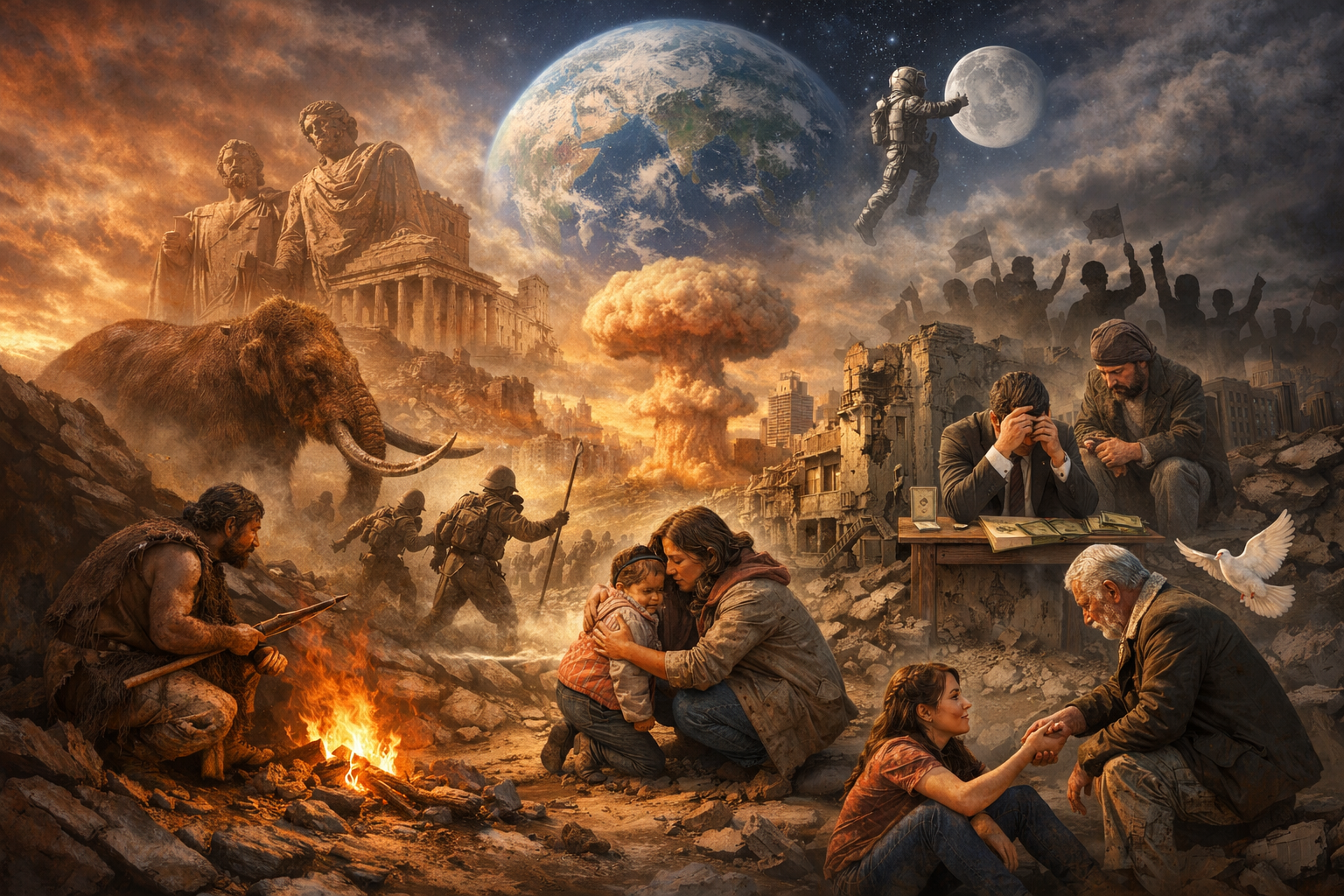
In the earliest days, survival was the battle. Hunger clawed at ribs, cold gnawed at bones, and fear slept beside every fire. Humans learned to fight nature with sharpened stone and stubborn hope. They survived not because they were strongest, but because they refused to stop reaching for tomorrow.
As centuries passed, the struggle changed its shape but not its weight. Empires rose from ambition and fell from the same hands that built them. Men and women fought wars not only for land, but for pride, belief, and the illusion of certainty. Progress brought tools, machines, and cities—but also greed, inequality, and the quiet loneliness of crowds.
The greatest struggle of humanity has never been against the world, but against itself. The same mind that creates cures also invents weapons. The same heart capable of compassion can harden into cruelty. Fear whispers that there is not enough—love, land, time—and people listen.
Yet within this struggle lives something unbreakable. Again and again, humans choose to stand back up. They rebuild after ruin, forgive after hatred, and dream after loss. A mother teaches a child kindness in a broken street. A stranger offers help with no reward promised. Small acts push back against centuries of darkness. Humanity struggles because it feels deeply, thinks endlessly, and hopes dangerously. And perhaps that is the point. The struggle is not a flaw, but a forge—shaping fragile beings into something capable of meaning.
As long as humans continue to question, to care, and to try, the struggle goes on. And so does the story.








 and then