









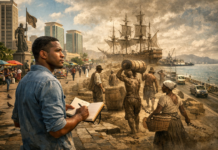













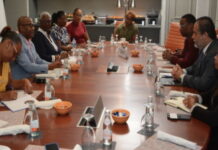
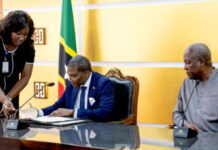

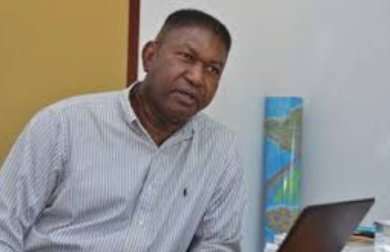
PARAMARIBO, Suriname, CMC – Chairman of the National Reparations Commission (NRC), Armand Zunder, has described as a “slap in the face to descendants of enslaved people in Suriname” the decision of the Netherlands to abstain from a United Nations resolution designating transatlantic slavery as the gravest crime against humanity.
Last week, the 80th UN General Assembly approved the Resolution designating the ”Trafficking of Enslaved Africans as the Gravest Crime Against Humanity”.
The Resolution was adopted by a majority vote of 123 in favor, 3 against, and 52 abstentions. All Caribbean Community (CARICOM) member states voted in favor of the Resolution.
The United States, Israel, and Argentina voted against, while the Netherlands was among the 52 countries that abstained from supporting the Resolution submitted by Ghana.
Zunder said that the Netherlands has actually taken steps towards recognition and reconciliation in recent years.
In 2022, then-prime minister Mark Rutte offered an apology, followed on July 1, 2023, by King Willem-Alexander, who also asked for forgiveness for the history of slavery. During his state visit to Suriname in December, the Monarch reiterated this request in conversations with, among others, the granmans of the Maroon tribes and other leaders of the Afro-Surinamese community.
“Here in Suriname, a group consisting of granmans and Para plantations, I believe, and perhaps a few other people, has even granted the King forgiveness for what the Dutch government, or at least what former Dutch administrators, have done. So this is a slap in the face, you could say, for this group, because the Dutch government has now actually taken a different stance on this world front,” said Zunder.
According to him, given the earlier apologies, The Hague should have supported the Resolution:
“But on the contrary, they did not support the resolution; they abstained from voting,” Zunder said, noting that now that this has occurred, it would be “wise” for Suriname’s Minister of Foreign Affairs or the President to ask their Dutch counterparts for “further explanation” in bilateral consultations.
Zunder said, ahead of the UN resolution debate, the Ministry of Foreign Affairs had sought advice from the NRC, which the committee said fits within a longer international trajectory.
Since the UN conference in Durban in 2001, slavery and the slave trade have been recognized as crimes against humanity. In 2013, CARICOM placed reparations on the agenda, and national reparations commissions were established, which jointly advise CARICOM leaders.
Within CARICOM, it has long been stated that slavery is a crime against humanity, and Zunder said the new Resolution goes a step further by classifying it as the most serious crime.
He said the NRC will focus on awareness and dialogue in the future and that a meeting will be held on Friday with grassroots organizations and other stakeholders to discuss the implications of the Resolution and the second UN decade for people of African descent.
Chairman of the CARICOM Reparations Commission (CRC), Professor Sir Hilary Beckles, has described the adoption of the UN resolution as a “historic, landmark decision”.
As a renowned Caribbean historian and leading global advocate for reparatory justice, Professor Beckles expressed his delight at the outcome of the vote, which he said was potentially a “game changer” at the United Nations, providing a stronger platform to strategically advance a coordinated diplomatic strategy to address reparations for Africans and people of African Descent through this critical intergovernmental body.
“Under the leadership of the African Union and CARICOM, 123 countries spoke resoundingly with one voice, affirming the grave injustice, recognizing the suffering and crimes against humanity committed against Africans for over four hundred years,” he said.
Over 15 million Africans were trafficked across the Atlantic to the Americas, from the 16th to 19th centuries, by enslavers backed by monarchies, banks, and private investors in 10 European countries.








 and then