




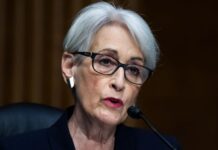
















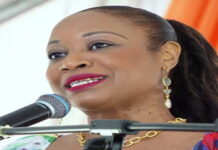

PARAMARIBO, Suriname, CMCC – Suriname is set to make history this Sunday when Jennifer Simons is expected to become the first country’s head to be elected president of this Dutch-speaking Caribbean Community (CARICOM) country.
Her path to the presidency was effectively cleared when the Progressive Reform Party (VHP) of outgoing President Chandrikapersad Santokhi announced it would not nominate candidates for either the presidency or the vice presidency.
Simons, representing the National Democratic Party (NDP), and Gregory Rusland of the National Party of Suriname (NPS) as her running mate for vice president, have secured the backing of 34 members of the National Assembly, precisely the number required for election in the first round.
With the General Liberation and Development Party (ABOP), headed by outgoing Vice President Ronnie Brunswijk, publicly supporting the NDP-NPS ticket and the VHP stepping aside, the pair now stands unopposed.
The nomination deadline passed on Thursday without any challengers, solidifying their expected election.
The nomination of Simons signals the end of President Santokhi’s term. While he will soon vacate the presidency, the transition is expected to proceed smoothly. Santokhi has already pledged his cooperation in ensuring a respectful and orderly handover of power.
The official inauguration of the new president and vice president is scheduled for July 16 at the Anthony Nesty Sports Hall. The newly elected chairman of the National Assembly, Ashwin Adhin, is coordinating the ceremony and has expressed confidence that the Ministry of Finance and Planning will promptly release the necessary funds.
In preparation for Sunday’s vote, the National Assembly has convened a housekeeping session to finalise key appointments.
Parliamentary group leaders, their deputies, and various committees—including the election and ceremonial escort committees—are being formally appointed. Lawmakers are also being briefed on the final logistics and procedures for the electoral session.
Following the May 25 general elections, the VHP emerged as the second-largest political force, securing 17 seats, but chose to take on the role of the opposition.
In a public statement, the party noted that it had been excluded from post-election coalition talks by the NDP, which captured 18 seats to become the largest party in the legislature. The VHP said that under current conditions, where Simons and Rusland enjoy the support of an absolute majority, it does not see a viable mandate to participate in government.
Positioning itself as a “watchdog of democracy” and a “voice of hope,” the VHP stated that it will now focus on constructive and informed opposition. The party thanked the 87,000 citizens who voted for them and reaffirmed its commitment to promoting social justice, transparent governance, and a Suriname where all citizens feel represented and respected.
With a strong presence in the Assembly, the VHP promises to hold the government accountable through rigorous debate and principled oversight, always prioritizing the national interest.
Political observers note that while the political situation is now clear, the economic landscape remains extremely worrying.
According to figures from the Bureau for the National Debt, the country’s total debt (domestic and foreign) amounted to more than SRD 38 billion (one SRD = 0.02 cents) at the end of April 2025, resulting in a debt ratio of 108 percent of gross domestic product (GDP).
The national debt rose from approximately US$3.1 billion at the beginning of 2022 to almost US$3.8 billion in April 2025.
The Bureau for the National Debt stated that the increase is primarily due to the foreign component, which is further exacerbated by exchange rate losses and interest accrual.
Political observers note that from 2025 to 2027, there will be no significant new sources of income, and the first oil revenues are not expected until 2028.
They said that until then, the new government may be forced into strict budgetary policy, reforms, renegotiations with creditors, and possibly a new International Monetary Fund (IMF) programme.





 and then