























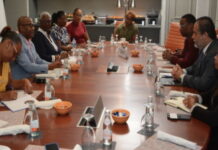
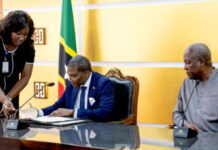


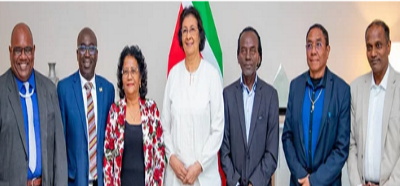
PARAMARIBO, Suriname, CMC – President Jennifer Greelings-Simons has established a six-member working group tasked with preparing the necessary inventories and policy proposals, in close consultation with indigenous and tribal peoples, as the government seeks to address the long-running, complex issue of land rights and decentralization in Suriname.
The working group, which will meet monthly with the head of state, is also tasked with preparing policy measures in the areas of land rights and decentralization, with a specific focus on the position of indigenous and tribal peoples.
According to presidential spokesperson, Roberto Lindveld, the working group serves as the head of state’s direct working arm, and its mission is to systematically map out which legal, administrative, and social aspects should be considered in the land rights issue.
It will also take into account existing documents, including the Association of Indigenous Village Leaders in Suriname.
“The President’s expectation is clear: this issue must ultimately be resolved. At the same time, she recognises that this is a complex process that requires careful and time-consuming work,” says Lindveld.
The working group includes the presidential advisor on land rights and decentralization, Edgar Dikan. It will focus on inventory, evaluation, and consultation with all relevant stakeholders to build support for future policy decisions.
Dikan said collaboration with the communities involved is essential for the mission’s success.
“Only by working together with the communities can we build support and ownership. This is necessary to make gradual progress and demonstrate that actual results will be achieved in the coming years,” he added.
Suriname’s land policy fails to legally recognise indigenous and tribal peoples’ collective rights, despite international rulings and recommendations, leaving their ancestral lands vulnerable to extractive industries and creating severe human rights issues, with a stalled land rights law and proposed amendments contradicting international standards like FPIC (Free, Prior, and Informed Consent).
The state claims ownership of all land, preventing indigenous communities from securing tenure, impacting their culture, environment, and access to services, forcing them to rely on advocacy and mapping efforts for recognition and protection.







 and then