




































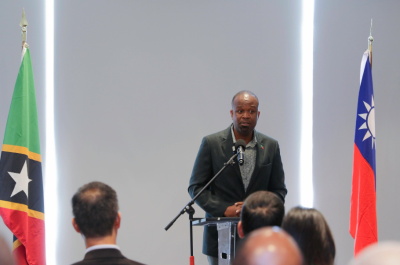
BASSETERRE, St. Kitts, CMC – The St. Kitts and Nevis government has launched the Green Energy Transition Demonstration project as part of efforts towards energy independence and sustainability in the twin-island Federation.
“This project is not simply about installing the infrastructure, as has been mentioned. It is about transforming how we think about Energy, how we generate it, how we store it, and how we manage it in a way that serves our people reliably and affordably,” said the Minister responsible for Energy, Konris G. Maynard.
“So, today’s launch reflects a broader direction that we have set as a country. One that prioritizes the strengthening of our energy systems to support resilience, sustainability, and long-term economic development.”
Maynard said that, within this context, there is a clear need to ensure that emerging technologies are not only introduced but also effectively integrated and managed to support the evolving needs of the energy or electricity sector.
“So, this green energy transition project contributes directly to this effort,” he told the ceremony.
The government says the project introduces an innovative microgrid system at the St. Kitts Electricity Company (SKELEC) Transmission and Distribution Facility, integrating solar photovoltaic generation, battery energy storage, and advanced energy management technologies.
It said that this initiative is expected to enhance grid stability, improve energy reliability, and support the integration of renewable energy sources across the Federation, with Maynard emphasizing the urgency of strengthening national energy systems, particularly for small island developing states facing the realities of climate change and economic vulnerability.
“It is essential. It is a must. We are on the front lines of climate change. We face volatile fuel prices and external shocks beyond our control.
“Strengthening our energy systems, making them smarter, more flexible, and more resilient, is one of the most important investments we can make in our future. Could you imagine if Saint Kitts and Nevis were completely powered by renewable Energy at this stage? There would be no concern about potential rises in electricity costs,” he said.
The project is being supported by the Taiwan government, whose Ambassador, Edward Ling-Wen Tao, reiterated his country’s strong commitment to supporting St. Kitts and Nevis in advancing a sustainable and resilient energy future, highlighting the enduring partnership between the two countries as well as the shared challenges faced by small island states in securing reliable and sustainable energy sources.
“This project represents more than a technical initiative; it reflects a shared vision between our countries to build a sustainable and resilient future,” Ambassador Tao said, adding that both Taiwan and St. Kitts and Nevis face similar vulnerabilities, including heavy reliance on imported Energy and exposure to the impacts of climate change.
“Since 2021, under the Renewable Energy Dispatch Project, we have moved beyond hardware to build a solid institutional foundation. With the guidance of Minister Maynard, our two sides have conducted a cost-benefit analysis and developed a regulatory framework necessary for a modern energy market.
He said, moving forward, the project “will be instrumental in helping the Federation to translate its sustainable island state agenda into an actionable and bankable roadmap by focusing on three strategic pillars.”
The diplomat outlined the three pillars guiding the project’s implementation, including grid capacity assessment, policy advisory, and the deployment of a smart microgrid system, all designed to ensure that renewable energy integration is both stable and scalable.
“The goal is to create a stable investment environment that mobilizes the private sector to participate in the Federation’s energy transition. We are not just talking about the future; we are building it.
“By deploying a benchmark solar plus storage microgrid, here in St. Kitts, we will establish the technical and operational guidelines needed to scale solar technology nationwide. The Federation has set an ambitious and inspirational goal to achieve 100 percent renewable electricity by 2030. Taiwan is ready to share its knowledge and expertise.”
Beyond infrastructure, the initiative is designed to build local capacity through training and technical engagement, ensuring that the knowledge and expertise required to manage advanced energy systems remain within the Federation.
Maynard described the project as part of a broader national transformation, noting that the Federation is positioning itself to become a leading example of clean energy transition in the Caribbean.
He pointed to SKELEC’s recent request for proposals for a historic 50-megawatt solar PV and battery energy storage project at the Basseterre Valley Aquifer as a significant step in that direction.









 and then