







































KINGSTON, Jamaica, CMC – Former Jamaican Prime Minister and regional statesman, P. J. Patterson, has called for sweeping reforms within the Caribbean Community (CARICOM), warning that the regional bloc must strengthen its unity and effectiveness or risk becoming irrelevant.
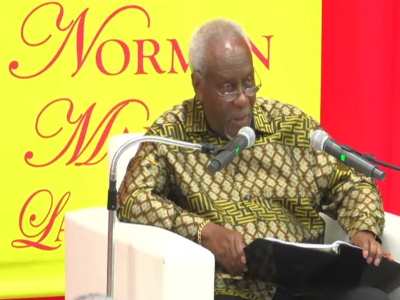
Addressing the Council of Legal Education’s Distinguished Lecture Series at the Norman Manley Law School at the University of the West Indies Mona campus on Wednesday, Patterson stressed that CARICOM needs enforceable systems to ensure that decisions taken by regional leaders are properly implemented.
Without such mechanisms, he cautioned, the organization will struggle to achieve its objectives.
Delivering a lecture on constitutional reform and regional integration, Patterson urged Caribbean nations to adopt a more assertive, cohesive approach to shaping their future. He argued that the region must develop its own strategies for resilience and economic growth, rather than remaining vulnerable to shifting global forces.
Drawing on the legacy of former Prime Minister Norman Manley, Patterson said the vision of a united Caribbean offering broader opportunities to its people remains only partially fulfilled. While there have been achievements, he noted that key goals such as free movement, trade integration, and policy coordination have not been consistently realized.
He emphasized that CARICOM must now focus on delivering tangible improvements to citizens’ lives—making it easier for professionals to work across borders, enabling businesses to operate within a truly functional single market, and ensuring wider access to justice through the Caribbean Court of Justice (CCJ).
Patterson also reiterated his long-standing position that Caribbean countries should adopt the CCJ as their final appellate court, replacing the Privy Council.
On public engagement, he said CARICOM must do more to communicate its work and relevance, noting that many citizens remain unaware of the benefits the regional body provides.
Turning to domestic matters, Patterson expressed concern about delays in Jamaica’s constitutional reform process and declining voter participation, particularly among young people. He warned that both issues could weaken democratic governance if not addressed.
He also pointed out that Jamaica continues to retain the British monarch as head of state and relies on an outdated constitutional framework, arguing that the time has come for full constitutional independence.
Addressing international developments, Patterson criticized what he described as inconsistencies in the application of international law and growing global instability. He raised concerns about the use of force and actions that may undermine legal norms.
He concluded by stressing that the success of Caribbean integration will depend not only on institutional reform but also on a shared sense of purpose among Caribbean people, calling for greater emphasis on regional identity within education systems.









 and then
 )