




























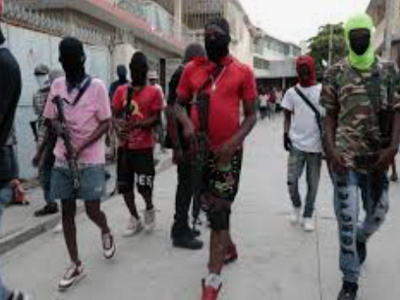
WASHINGTON, CMC – UNICEF says the number of children in Haiti recruited and used by armed groups has skyrocketed by an estimated 200 per cent last year, reflecting a growing reliance on the exploitation of children, amid ongoing violence by armed groups.
The UN agency said that the situation for children in Haiti remains critical, noting that more than 1.4 million people are internally displaced, over half of them children facing overlapping crises, including armed violence, natural disasters, and extreme poverty.
It said that these conditions have fueled the growth of armed groups, increasingly forcing children into recruitment.
“Children’s rights are non-negotiable. Every child must be protected. And every child recruited or used by armed groups must be released and supported so they can heal, return to learning, and rebuild their future,” said UNICEF Executive Director, Catherine Russell.
UNICEF said that recruitment and use of children by armed groups constitutes a grave violation of their rights, and enlisting children of any age into armed groups is a breach of international law.
It said recruitment into armed groups exposes children to multiple risks, including injury, maiming, or death in combat, sexual, psychological, and physical abuse, and arbitrary detention, while also disrupting their access to education, thereby undermining their safety, well-being, and overall development.
According to UNICEF, children in Haiti are often forced to join armed groups to support their families or after receiving direct threats to themselves or loved ones. In contrast, others are recruited after being separated from their families, turning to armed groups as a means of survival and protection.
The UNICEF report coincides with the anniversary of the signing of the Handover Protocol in January of 2024, during which the UN agency and child protection actors verified and supported more than 500 individuals associated with armed groups with specialized protection and reintegration services across Haiti.
UNICEF said that together with several stakeholders, including the Haitian Institute of Social Welfare and Research (IBESR), the Ministry of National Education and Vocational Training (MENFP), humanitarian partners, and the international community, it has been supporting children and families affected by violence in various ways.
These include psychosocial support, case management, referrals to health and protection services, educational support, and temporary learning spaces where needed, as well as assistance with family tracing and reunification where feasible, all provided in accordance with the best interests of the child.
UNICEF said it is calling on national authorities and all relevant stakeholders to strengthen child protection systems, ensure safe and sustained access to essential services, and reinforce family tracing and reunification support when this is in the child’s best interests and can be done safely.
“Communities also have a critical role in prevention, including through local and community-based child protection networks and safe, confidential reporting pathways that can connect children at risk of recruitment with support early,” UNICEF said, calling on donor governments, the private sector, and others to support critical support programmes for children and families affected by violence, which remain significantly underfunded.
“Children associated with armed groups must not be treated as perpetrators. They must receive appropriate reintegration services and be protected from additional risks, stigma, or retaliation,” said Russell.






 and then