

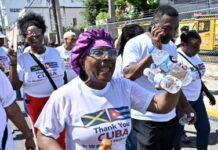

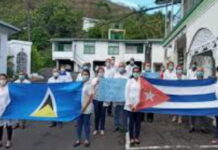








ROSEAU, Dominica, CMC – The Dominica government says it plans to announce soon changes to the Cuban medical workers programme here, while remaining grateful nonetheless for Cuba’s contribution to the island’s health system.
Last month, the United States Embassy in Barbados said the Cuban regime’s “medical missions” programme, which has benefitted several Caribbean countries, relies on coercion and abuse.
“Cuban medical workers face withheld wages, confiscated passports, forced family separation and exile, restriction of movement through curfews and surveillance, intimidation and threats, and even pressure to falsify medical records and fabricate procedures. Many also endure excessive work hours and unsafe conditions,” the Embassy said.
Washington has also stepped up its attack on the Cuban health brigade programme, saying that the regime in Havana is profiting off the forced labour of medical personnel and that “renting out Cuban medical professionals at exorbitant prices and keeping the profit for regime elites is not a humanitarian gift.
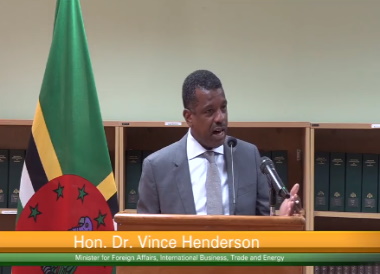
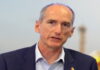
Speaking in Parliament, Dominica’s Foreign Affairs Minister, Dr. Vince Henderson, said that there will be changes to the Cuban medical workers programme.
“We recognise that we have to make some changes to the medical workers programme and we are grateful that the government of Cuba has graciously agreed to work with us as we seek to meet new requirements for the Cuban health workers,” he said.
“I want to take the opportunity to thank the Republic of Cuba for over 30 years of support to the government and people of the Commonwealth of Dominica through the provision of medical workers.
‘We know, and it is no secret that this relationship has been created out of solidarity, and that is to say Cuba providing support to countries throughout the world and Dominica happen to occupy a very special place in the Republic of Cuba and we have been provided with medical doctors, there are 65 to date and I may be off by one or two.
“But we have medical professionals, doctors, there are physicians, specialists, there are nurses and other technicians providing support to us through that programme,” Henderson said.
He said that Dominica will continue to express its support for Havana, noting that, in addition to Cuba providing training for Dominicans who have graduated from Cuban medical schools, “we have to remember that it was Cuba that allowed us open our first intensive care unit and diagnostic center”.
He said as a result, Dominica was able to get both specialised doctors and nurses to operate the center, “and we will always be grateful to the Republic of Cuba, they have been true friends through thick and thin, even when they had their own internal challenges, in terms of resources, they never hesitated to supply us with support”.




 and then