






























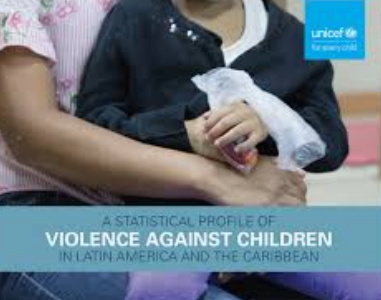
PANAMA CITY, Panama, CMC- A new report by two United Nations organizations, released Monday, noted that in Latin America and the Caribbean (LAC), violence continues to be a serious threat to the lives, health, and well-being of millions of children, adolescents, and young people.
In a joint publication titled “Violence against children and adolescents in Latin America and the Caribbean: New data and solutions,” the Pan American Health Organization (PAHO) and the United Nations Children’s Fund (UNICEF) said the most serious consequence of violence is the death of thousands of children, adolescents, and young people.
They said that between 2015 and 2022, an estimated 53,318 children and adolescents were victims of homicide in the region.
The most recent available data, focusing on adolescents aged 15 to 17 years, show contrasting trends by sex. Between 2021 and 2022, the homicide rate among adolescent boys decreased from 17.63 to 10.68 deaths per 100,000 in Latin America and the Caribbean, although it remains high.
During the same period, the rate among female adolescents doubled, from 2.13 to 5.1 deaths per 100,000.
The two UN agencies said homicides occur in a context of rising armed violence in some areas of the region, associated with organized crime, easy access to firearms, social inequalities, and harmful gender norms, which increasingly expose adolescents to situations of lethal violence.
They said different forms of violence are interconnected and, in many cases, intensify over time.
The report highlights how violence is present from a very early age. In the region, six out of 10 children and adolescents under 14 years of age are subject to some violent discipline at home, while one in four adolescents aged 13 to 17 experiences bullying at school.
Nearly one in five women in Latin America and the Caribbean reports having experienced sexual violence before the age of 18. Increasingly, violence manifests itself in digital environments, although available data remains limited.
“Every day, millions of children in Latin America and the Caribbean are exposed to violence – at home, at school, and in communities with a gang presence. Multiple places and situations in the region present real risks and dangers for children,” said Roberto Benes, UNICEF Regional Director for Latin America and the Caribbean.
“We know how to end the violence. In Latin America and the Caribbean, strong and sustained public policies are required to prevent and respond to violence in all its forms so that every child can grow up in a safe environment.”
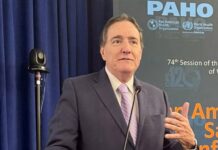
PAHO director Dr. Jarbas Barbosa said violence has a profound and lasting impact on the physical and mental health of children and adolescents and violates their right to grow up in safe environments, at home, school, and in the community.
“Health services play a key role in prevention and response: when health workers identify people and groups at risk early and provide timely, quality support, they can make a real difference for survivors, their families and communities.”
In addition to describing the scale of the problem, the report highlights evidence-based solutions that can prevent violence and mitigate its costs.
To advance this agenda and end violence in all its forms, PAHO and UNICEF urge governments in the region to strengthen and enforce child protection laws, ensure effective control of firearms, train police officers, teachers, and health and social workers, and support parents and caregivers in respectful parenting practices.
They also urge investment in safe learning environments, and scale up responsive services to ensure that all children and adolescents grow up protected, have access to justice, and live healthy, violence-free lives.
The report was validated during a regional ministerial consultation held on October 23-24 last year, which brought together more than 300 participants from across the region, including ministers and senior officials from the health, education, justice and child protection sectors, as well as civil society representatives, youth leaders and international partners, to agree on concrete actions to build safer environments for children and adolescents.






 and then
 , violence continues)