






























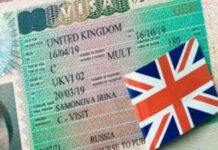


WASHINGTON, CMC – The recent proclamation issued by the Government of the United States, announcing its intention to suspend the entry of nationals of Antigua and Barbuda and the Commonwealth of Dominica, effective at 12:01 a.m. on 1 January 2026, has understandably caused concern among citizens of the two Caribbean countries. Since then, it has been learned that nationals of other Caribbean countries, including government ministers, have been denied US visas.
For many in these countries — as in the rest of the Caribbean — access to the United States for family ties, education, medical care, business, and opportunity is deeply valued. Any uncertainty about that access naturally gives rise to anxiety, not only for individuals but also for economies closely linked to the United States through trade, tourism, investment, and people-to-people exchanges. There is therefore an urgent and legitimate need for clarity about what will apply after 1 January 2026, particularly with respect to existing visas.
From the moment the proclamation was published, Prime Minister Gaston Browne and I have been actively engaged with senior representatives of the United States Government to seek clarity and to work constructively toward resolution. Those efforts are ongoing. It is relevant to note that the proclamation came as an unexpected development, including to officials within the US system responsible for Caribbean affairs.
It would be disingenuous not to acknowledge that it was not very pleasant for Antigua and Barbuda and Dominica that this proclamation was issued without advance notice to either government. This is especially so given that, for almost a year, representatives of several United States Government departments and the governments of the five Caribbean countries operating Citizenship by Investment (CBI) programmes have been engaged in sustained and detailed discussions on precisely these issues. That engagement was constructive and undertaken in good faith on all sides.
Moreover, the five countries took collective steps — based on recommendations from US officials — to streamline and strengthen the legislative and regulatory frameworks governing their CBI programmes.
The stated reason for the proclamation, as it applies to Antigua and Barbuda and Dominica, is that these countries have historically operated CBI programmes “without residency.” In Antigua and Barbuda’s case, that characterisation does not reflect the full facts. Antigua and Barbuda has always had a residency requirement, and in November of this year, Parliament significantly strengthened it as part of a broader legislative reform package. Dominica has also enacted extensive reforms. These measures were taken precisely to address concerns raised and to align systems with the highest international standards.
Some surprise has also been expressed that Antigua and Barbuda and Dominica were identified for visa restrictions when three other Caribbean countries operating similar programmes were not included. This, too, is a matter that merits calm clarification through dialogue.
There has inevitably been speculation by commentators and political activists about what they describe as the “real reasons” behind the proclamation. Governments, however, cannot conduct relations based on speculation. Diplomatic engagement must proceed based on the reasons formally stated by governments themselves. In this instance, those reasons relate to CBI programmes and residency requirements, and that is therefore the issue that must be addressed directly, factually, and constructively.
Antigua and Barbuda fully recognises the sovereign right — and indeed the responsibility — of the United States to protect its citizens from external threats and to ensure that visas are not used for illicit or harmful purposes. We share those objectives. That is why we remain ready to work with the United States to establish and refine all necessary safeguards and guardrails to ensure that the systems we operate present no risk to US security.
For 250 years, Caribbean countries and the United States have shared a tradition of close, cooperative, and mutually beneficial relations — economically, socially, and strategically. That relationship has served all our peoples well. It is that tradition which must now guide us: preserving security while maintaining lawful and legitimate access for citizens to each other’s countries.
This moment, therefore, calls not only for calm but for timely clarity. Prolonged uncertainty benefits no one. For citizens who have already been vetted and issued valid visas by United States authorities, it is reasonable that lawful travel be allowed to continue — subject to any additional checks the United States considers necessary — while longer-term solutions are finalised for new visa applicants.
Antigua and Barbuda approaches this matter in good faith, with respect for the United States’ sovereign responsibilities and confidence in the value of our long-standing relationship. We look to that tradition of dialogue and cooperation to ensure that security is upheld without unintended harm to ordinary people, legitimate commerce, education, and family ties.
That work has already begun, and officials from the United States and Antigua and Barbuda are now examining mechanisms to identify early, practical solutions.
That balance has been achieved before. It can and should be achieved again.







 and then