






































SANTIAGO, Chile, CMC -The executive director of the Economic Commission for Latin America and the Caribbean (ECLAC), José Manuel Salazar-Xirinachs, says information production must be at the center of public policy discussions, as officials from Latin America and the Caribbean discussed the future of the statistical output in the region.
“That is the only way to ensure that our decisions will be based on solid evidence and that our efforts to achieve sustainable development will be effective,” Salazar-Xirinachs said as he addressed the 23rd meeting of the Executive Committee of the Statistical Conference of the Americas of ECLAC (SCA-ECLAC) that ended here on Thursday.
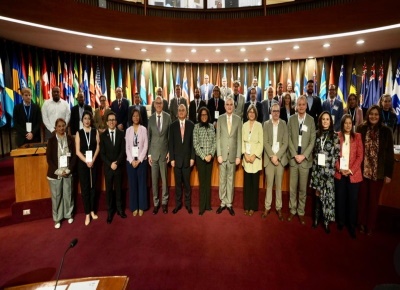
The meeting brought together representatives of regional and national statistical offices, regional and international organizations, and United Nations agencies, funds, and programs, among other stakeholders.
Along with the Dominican Republic as Chair, the SCA’s executive committee comprises Argentina, The Bahamas, Grenada, Mexico, Peru, Spain, and Uruguay.
Salazar-Xirinachs told the meeting that reviewed the regional challenges in the new 2026-2035 Strategic Plan of the Statistical Conference of the Americas and examined progress on the implementation of the 2024-2025 Biennial Programme of Regional and International Cooperation Activities that statistical capacity is one of the most critical technical, operational, political, and prospective (TOPP) capacities of institutions.
He called for accurate, up-to-date, and complete data to measure development gaps and traps and evaluate policies geared towards closing those gaps and escaping those traps.
Salazar-Xirinachs said regional countries face significant challenges in producing official statistics, but there are also valuable opportunities for strengthening this production. He said that one of the most promising developments is the use of administrative records as a source of information, underscoring the relevance of the SCA and “the main regional space for collaboration so that countries and international organizations can work together to seek out shared solutions to statistical challenges.
“The work and contributions of the Statistical Conference of the Americas have made considerable progress along diverse lines of action. We hope this progress will not only be maintained but also bolstered.
Our aspiration is that the collaborative work between countries, in the framework of this Conference, will continue to be a pillar for strengthening statistical production and its application in public policies,” he added.
The Director-General of the Dominican Republic’s National Office of Statistics, Miosotis Rivas Peña, addressed the challenges for Latin America and the Caribbean’s statistical production posed by issues such as big data and Artificial Intelligence.
“These issues have already made it onto our agenda, and they require our commitment and collaboration,” she said, adding that strengthening the community of women leaders in National Statistical Offices is crucial.
“Diversity in leadership not only enriches our perspectives, it is also essential for addressing the challenges we face in these environments,” she said.









 and then
 , José Manuel Salazar-Xirinachs)