





































SANTIAGO, Chile, CMC – The executive secretary of the Economic Commission for Latin America and the Caribbean (ECLAC), José Manuel Salazar-Xirinachs, says the region faces three development traps that limit its ability to move towards a more productive, inclusive, and sustainable model.
Addressing the 13th Meeting of the Statistical Conference of the Americas, he said Latin America and the Caribbean (LAC) face low capacity for growth and transformation; high inequality and low social mobility and cohesion; and weak institutional capacities and ineffective governance.
“These traps can be overcome, but doing so requires profound transformations to reorient our development model,” he told delegates attending the meeting that ends on Thursday.
“We have proposed 11 major transformations for the region, which range from driving economic growth leveraged by productive development, increased productivity and job creation, to inequality reduction, progress towards gender equality, the digital transformation, and the environmental big push to promote sustainability and address climate change,” he explained.
Salazar-Xirinachs said that today’s complex and fragmented contexts, marked by rapid technological change, necessitate significant capacity for coordination, management, and dialogue, noting that even the best strategies need proper implementation.
He said ECLAC is promoting a conceptual framework for analysing the capacities states need to lead these transformations, known as the TOPP (technical, operational, political, and prospective) capabilities.
“These capabilities are reinforced when articulated with adequate governance arrangements, with social dialogue mechanisms that increase the legitimacy of policies, and with an understanding of political economy that allows for sequencing and negotiating transformations and making them viable.
“The production of official statistics is perhaps the clearest example of this need for integrated capabilities. Without quality data, there are no solid diagnoses and no evaluation or accountability,” he said.
He also referred to the Beyond GDP initiative, established in 2025 by the United Nations Secretary-General, which seeks to examine the limitations of gross domestic product (GDP) as the leading indicator of progress and consider alternatives that would better reflect the multidimensional nature of sustainable development, including the social, environmental, and human well-being dimensions.
Salazar-Xirinachs said that GDP per capita does not capture the actual structural limitations of Latin American and Caribbean development, noting that ECLAC is well-placed to support this agenda as a regional data integrator, a promoter of strengthened capacities, and a space for intergovernmental articulation.
“Moving beyond GDP is not just a technical challenge; it is also a deeply political challenge. The way we measure development determines access to cooperation and financing, especially for the small island States of the Caribbean, and ultimately shows what kind of societies we want to build.”
Salazar-Xirinachs said that in an international context marked by growing budgetary and operational restrictions within the United Nations system, strengthening these intergovernmental technical spaces is more critical than ever.
“The Statistical Conference of the Americas is an example of how, even at a time of limitations, cooperation, articulation among countries, and collective capacity-building can sustain significant progress,” he added.
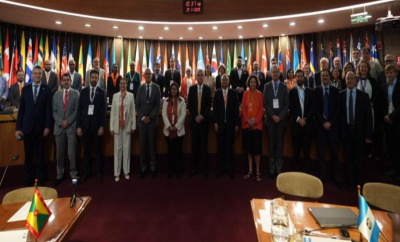
The conference has brought together representatives from National Statistics Offices from Latin America and the Caribbean seeking to strengthen data governance in national statistical systems by promoting regulatory and institutional frameworks that can ensure technical autonomy, transparency, interoperability, and sustainability in the production and use of official data.
During the meeting, delegates are expected to adopt the Strategic Plan 2026-2035 of the Statistical Conference of the Americas of the ECLAC as the regional frame of reference for guiding the strengthening, modernization, and cooperation of national statistical systems in Latin America and the Caribbean.
The plan aims to promote the production and use of quality, comparable, and accessible official statistics for the region’s sustainable development.
In addition, the meeting will examine the outcomes of the Conference’s Biennial Programme of Regional and International Cooperation Activities 2024-2025 and will present and approve proposals for the creation of Working Groups in the 2026-2027 biennium.
A new executive committee for the 2026-2027 period will also be elected.










 and then
 , José Manuel Salazar-Xirinachs, says the region)