







































SANTIAGO, CMC – Caribbean countries have joined their Latin American counterparts in calling for strengthening data governance and administration in national statistical systems through regulatory and institutional frameworks.
At the conclusion of the Thirteenth Meeting of the Statistical Conference of the Americas (SCA), at the main headquarters of the Economic Commission for Latin America and the Caribbean (ECLAC) here, delegates recognized the importance of strengthening data governance that “ensure technical autonomy, transparency, interoperability and sustainability in the production and use of official data,” according to ECLAC.
The intergovernmental meeting – the main forum for discussing the development of statistics in the region – brought together, on November 25-27, authorities from the National Statistics Offices of Latin American and Caribbean countries, along with specialists and representatives of United Nations agencies, funds, and programs.
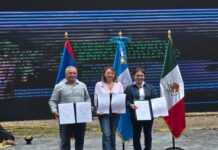
During the conference’s closing session, Uruguay took over as chair of the Statistical Conference of the Americas for the 2026-2027 period.
The new Executive Committee also comprises the Bahamas, Belize, the Dominican Republic, Guatemala, Honduras, Peru, and Spain.
Marcelo Bisogno, director of the National Institute of Statistics (INE) of Uruguay, expressed gratitude for his country’s nomination as chair of the SCA and emphasized the challenges faced by regional governments in statistical matters, especially amid technological and social change.
He stressed that “the generation of synergies among the different countries of the region is very positive” and congratulated ECLAC for providing a space to maintain and strengthen them.
Mildred Martínez, general director of the National Office of Statistics of the Dominican Republic – the country that chaired the Thirteenth Meeting of the Statistical Conference of the Americas of ECLAC – highlighted the work carried out in the last two years and echoed the importance of synergy between countries, “which contributes fundamentally to strengthening national and regional statistical systems.”
Participating countries approved a resolution that, among other points, highlights the progress made by the countries of Latin America and the Caribbean in modernizing their statistics infrastructure and, in particular, in the use of administrative records and the development of population and housing registers, and the need to ensure quality, coverage, and the protection of personal data in those processes.
The resolution also underscores the importance of the Beyond GDP (Gross Domestic Product) initiative and the “valuable contribution of the high-level expert group to the development of new conceptual frameworks and indicators that more comprehensively reflect the economic, social, and environmental dimensions of sustainable development.”
ECLAC said the resolution recognizes that the 2030 Agenda for Sustainable Development has been “a fundamental catalyst for the strengthening of national statistical systems and the design of more comprehensive multidimensional development metrics.”
The resolution also stresses “the importance of drawing on the lessons learned in follow-up of the Sustainable Development Goals to guide the conceptual and methodological frameworks underpinning the metrics that are complementary to GDP, ensuring the relevance, comparability and usefulness thereof for evidence-based public policy formulation.”
In addition, the resolution calls on national statistical offices, regional bodies, and United Nations system entities to “maintain continued and effective cooperation, with a view to strengthening the empirical, methodological and conceptual basis of metrics that are complementary to GDP and moving towards a modern, inclusive and people-centered statistical agenda.”
ECLAC said regional countries adopted its Strategic Plan 2026-2035 of the Statistical Conference of the Americas as “the regional frame of reference for guiding the strengthening, modernization and cooperation of national statistical systems in Latin America and the Caribbean, to promote the production and use of high-quality, comparable and accessible official statistics for the region’s sustainable development.”











 and then