




















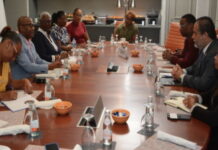

BRIDGETOWN, Barbados, CMC – Several Caribbean countries are benefiting from a Pan American Health Organization (PAHO) initiative aimed at strengthening their vaccine cold chain systems, ensuring vaccine potency, and reinforcing routine immunization.
PAHO said that Anguilla, Antigua and Barbuda, British Virgin Islands, Cuba, Curacao, Dominica, Grenada, Haiti, Jamaica, Montserrat, St. Kitts and Nevis, St. Vincent and the Grenadines, Suriname, Trinidad and Tobago, and St. Maarten were among 18 countries benefitting from the project funded by the government of Canada.
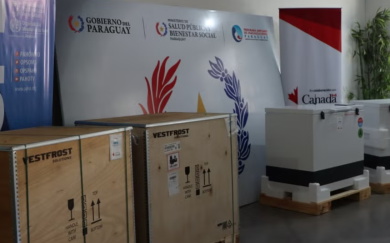
It said that through PAHO’s Regional Revolving Funds, Canada’s support provided approximately 1,000 units of cold chain equipment, including temperature-monitoring devices; long-term, passive cold boxes and vaccine carriers designed for complex logistics and environments; and ice-lined refrigerators with freeze-protection technology.
“This new cold chain equipment strengthens the capacity of countries to protect every vaccine dose from the moment it arrives in the country to the moment it reaches families and communities,” said Santiago Cornejo, the executive manager of PAHO’s Regional Revolving Funds.
“These tools help ensure safety, reduce wastage, and expand equitable access to immunization. We are grateful to the Government of Canada for its continued partnership to help us introduce the latest technologies and innovations in the region.”
The donation forms part of the PAHO-implemented project, supported by Canada, “Improving Equitable Access and Coverage of COVID-19 Vaccination in Latin America and the Caribbean.”
The initiative aims to reinforce public health systems and infrastructure across the region.
PAHO’s Regional Revolving Funds are technical cooperation mechanisms that enable countries of the Americas to procure quality vaccines, essential medicines, and public health supplies at affordable prices through pooled purchasing and coordinated planning.
PAHO said that by working collectively, countries have saved an estimated 50 per cent on vaccines and other health supplies, benefiting around 180 million people in the last biennium. “Over the years, the funds have helped countries secure timely access to essential health supplies, supporting progress against HIV/AIDS, malaria, and tuberculosis, while also improving immunization coverage and reducing maternal and child mortality,” PAHO added.







 and then
  initiative aimed at strengthening their vaccine)