

































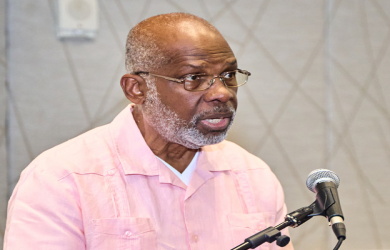
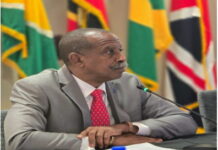
BRIDGETOWN, Barbados, CMC – Chairman of the Caribbean Natural Resources Institute (CANARI), Cletus Springer, is urging regional countries to pursue climate justice through practical, forward-looking strategies that can withstand major geopolitical shocks.
Addressing the two-day CANARI Partners Forum, which ends here on Tuesday, Springer told the regional and international delegates that the meeting here is not intended to be merely theoretical.
“The operational tone here is strategic action … it is a roll-up-your-sleeves kind of activity,” he said, adding that participants had gathered to focus on “the shifts that are needed to address the inequities and injustices being experienced by our people in the Caribbean because of climate change”.
The event is being held under the theme “Towards climate justice in the Caribbean: building understanding and catalysing partnerships and finance,” and will discuss issues including climate justice as a development, human rights, and resilience priority for the region.
Springer said that the discussions were taking place against the backdrop of what he described as “truly seismic geopolitical upheaval,” which threatens to marginalise small states within the global multilateral system.
Springer said that the multilateral system is disappearing with “amazing speed” and that while imperfect, it has historically provided small island states with a platform to be heard.
S[ringer said that the changing global landscape required a broader analytical lens and posed a central challenge for Caribbean policymakers and advocates.
“How do we advance a climate justice agenda that is robust enough to survive current and future geopolitical shocks?” Springer asked, noting that responding to climate change could not be limited to present-day activities alone.
“We have to project forward and come up with a strategy that can survive these changes,” he said, noting the escalating impacts of climate change across the region, pointing to increasing extreme weather events and a developing drought in the Eastern Caribbean.
He said this scenario is projected to extend well into the traditional rainy season.
“These varied impacts justify the description that our heads of government have placed on climate change as an existential threat to the sustainable development of the Caribbean,” he said, reiterating the “profound unfairness” in the global climate system.
“The wealthiest individuals and nations who contribute most … experience less impact and have greater capacity to adapt, while the poorest, less responsible communities suffer the worst effects and have the fewest resources to cope,” Springer said, warning that this imbalance fuels ongoing social and economic inequality.
He said efforts to achieve climate justice must go hand in hand with protecting vulnerable livelihoods and prioritising those on the front lines of climate impacts.
“We must listen to the lived realities of those on the front line of climate impacts,” Springer said, emphasising the need to understand how climate change affects human rights.
Springer called for collective action grounded in care and solidarity, adding that climate justice must confront structural power imbalances and move beyond purely technical solutions.
“Approaches to climate justice must move beyond technomanagerialist solutions and use an intersectional lens to expose root causes…climate justice must challenge structural power disparities and aim to reduce marginalisation, exploitation and oppression.”








 and then
 , Cletus Springer, is urging regional countries to pursue climate justice through)