





































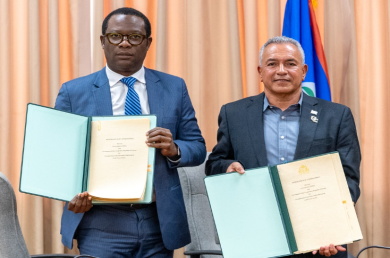
GEORGETOWN, Guyana, CMC -Belize and Guyana have signed a memorandum of understanding (MoU) to strengthen cooperation in the conservation, sustainable management, and protection of forests.
The two Caribbean Community (CARICOM) countries have significant tropical forest resources that play a vital role in biodiversity conservation, climate regulation, and building resilience to climate change.
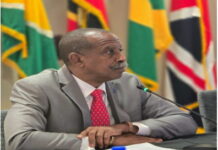
Foreign Affairs Minister Hugh Todd said the partnership brings together two heavily forested CARICOM states, positioning them to play a stronger role in regional and global environmental governance.
Small states cannot do it alone. We need strong partnerships at the regional and multilateral levels,” Minister Todd noted, adding that the MoU signals a unified approach to addressing climate change while maintaining Guyana’s status as a net carbon sink.
Belize’s minister of Sustainable Development, Climate Change and Solid Waste, Orlando Habet, described the agreement as “more than a document”.
“This memorandum of understanding strengthens our partnership with Guyana and our capacity to conserve biodiversity, enhance climate resilience, and advance sustainable development, while creating opportunities in carbon markets and climate finance,” said Habet.
The MoU establishes a framework for collaboration, focusing on forest conservation and sustainable management; biodiversity protection and ecosystem integrity; climate change resilience and adaptation; measurement, reporting, and verification (MRV) systems; and the exploration of carbon market opportunities.
According to an official statement issued following the agreement’s signing on Friday, the two CARICOM governments face common challenges, including deforestation, illegal logging, land-use change, wildfires, and the increasing impacts of climate change.
“Through this partnership, both countries will address these challenges through coordinated action, knowledge exchange, and capacity building,” the statement said, noting that under the MoU, the two countries will collaborate through joint initiatives to strengthen forest management and conservation, sharing of technical expertise, data, and best practices, strengthening monitoring, surveillance, and MRV systems, promoting sustainable livelihoods, including for Indigenous peoples and local communities, enhancing access to climate finance and international support and advancing research, innovation, and institutional capacity.
The cooperation also emphasizes inclusive and sustainable development, ensuring that efforts support communities while respecting traditional knowledge and cultural practices.
The implementation of the MoU will be supported through designated national focal points and may include the establishment of a Technical Working Group.









 and then
  to strengthen cooperation in the conservation, sustainable management, and protection of forests)