













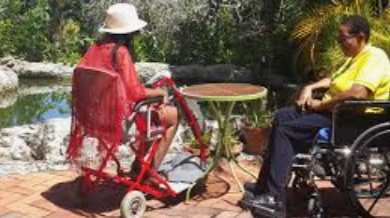
BRIDGETOWN, Barbados, CMC – The Barbados government has outlined several initiatives aimed at improving the lives of people with special needs, families caring for persons with disabilities, and pregnant mothers.
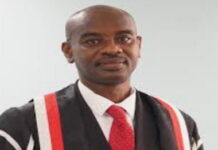
Finance Minister Ryan Straughn, presenting Mia Mottley’s government’s first national budget after it won all the seats in the February general election, said that as the father of an autistic son, he can fully understand the challenges faced by parents, who fear what would happen to their children when they die.
He said individuals with special needs require exceptional treatment and care, and as such, the government’s focus on mitigating these vulnerabilities will remain at the core of its policy response.
Straughn said that families caring for persons with disabilities often face significant financial challenges, including long-term medical and therapy costs; specialised housing and caregiving needs, and uncertainty about financial support after the death of parents or guardians.
The finance minister said that while Barbadian law currently allows trusts to be established, there is no specific statutory regime governing trusts created for disabled beneficiaries, particularly with respect to the taxation of trust income and distributions.
He said that although trusts may be created under existing legislation, the absence of a specific statutory framework creates several challenges, including uncertainty about the taxation of trust income and distributions, a lack of clear regulatory standards for such trusts, and limited financial planning options for families.
Straughn said as a result, the government is proposing to introduce a Special Needs Trust framework in Barbados, effective April 1, this year, that would allow families to set aside assets for the long-term care and financial security of persons with disabilities.
He said the proposed framework would allow parents and guardians to create Special Needs Trusts for disabled beneficiaries, exempt trust income and distributions used for the care of disabled persons from personal income tax, clarify the tax treatment of trustees administering such trusts, and support the objectives of the national disability policy.
“This reform would provide long-term financial security for vulnerable citizens while having minimal fiscal impact on government revenue,” Straughn said.
He recalled that, from June 1 last year, the government had extended the maternity leave provision for mothers from 12 weeks to 14 weeks for single births and to 17 weeks for multiple births.
“We are conscious of the additional expense multiple births can have on family income early on. To further assist and strengthen families, I propose to introduce a multiple birth cash grant from April 1, 2026, to support families of multiple births up to age five, which the Social Empowerment Agency will administer.”
Straughn said that the grant payable to the family will be BDS$300 (one BDS$=US$0.50 cents) per month for twins up to age five, and BDS$600 per month for triplets and more, adding that the estimated costs per year, assuming 10 families per year in each category, are BDS$108,000.
Families with twins, triplets, or other multiple births aged under 5 can apply for the grants. No means testing is required to access the multiple birth cash grant.”
The finance minister said that creating a better life for Barbadians is the cornerstone of the ruling Barbados Labour Party (BLP) ‘s mandate.
“Too many families start from zero, generation after generation. A one-time shock, job loss, illness, or a broken roof, for instance, can erase years of progress. A universal birthright creates a baseline asset that cannot be taken away by bad luck and lack of opportunities,” he said, adding that the government believes that it must reduce inequality without dividing the country.
“This is not a programme that labels or stigmatises. It is a national standard to which we must aspire as a Republic, where every Bajan child deserves a chance to thrive,” Straughn said, adding that with that ethos in mind, he is proposing the establishment of the Barbados Republic Child Wealth Fund (BRCWF).
He said the BRCWF will fund a one-time birthright investment of BDS$5,000, held in trust for every child born in Barbados on or after November 30, 2021.
“In the Estimates of Revenue and Expenditure for 2026-27, we have set aside an estimate of BDS$52.1 million to cover those born between November 30, 2021, and the end of this financial year,” he said, adding that “once the legislation is passed, these investments will be treated as statutory in nature”.
Straughn said that the government will deposit actual money into a legally ring-fenced fund, to be invested in real assets -bonds, equities, diversified funds – with individual beneficiary accounting.
He said that to qualify for the following eligibility criteria apply: Barbadian citizen by birth, Barbadian citizen by descent of a Barbadian public official working abroad on behalf of the Government of Barbados, or a Barbadian citizen by descent of a Barbadian who is ordinarily resident in Barbados.
There must be a continued connection to Barbados, with a minimum residency of 10 years before the age of 18, or non-resident status for children born abroad of persons working for the Government of Barbados, with proceeds to be used for education at home or abroad, while restricting housing use to Barbados. Proceeds will be used to fund education or housing restricted to Barbados.
Legislation will be introduced this year before the 5th Anniversary of the Republic and the 60th Anniversary of Independence to govern the administration of this Fund. An independent entity of the government of Barbados, and not a single institution or company, will administer the Barbados Republic Child Wealth Fund (BRCWF) and manage its investment decisions. ”
Straughn also announced that in a small island state like Barbados, swimming is not a luxury skill but a life-saving one, given the loss of life every summer and the low percentage of Barbadians who are actually able to swim.
“Yet many children, particularly those with disabilities and those from vulnerable communities, do not have structured access to safe, supportive instruction,” he said, adding that equitable access to water safety and aquatic education is critical for all.
He said that by providing inclusive Learn2Swim and kayaking programmes with strong supervision and adaptive support, the programme ensures that no child is excluded from the confidence, safety, and developmental benefits of the marine environment.
Straughn said the National Sport Council, working with the non-profit organisation All Access Watersports, will introduce an Adaptive Aquatics Programme to facilitate children and adults with disabilities learning to swim through the Sports Council.
He said BDS$450,000 has been allocated, including summer camp and year-round water safety training.
“We will also be providing funding for the National Sports Council in the Estimates for the two new Olympic-size pools … which will significantly expand capacity,” he told legislators.






 and then