GENEVA, CMC – The Pan American Health Organization (PAHO) says it has signed a technical cooperation agreement with the Carter Center to strengthen collaboration on the elimination of onchocerciasis, also known as river blindness, and other communicable diseases in the Americas.
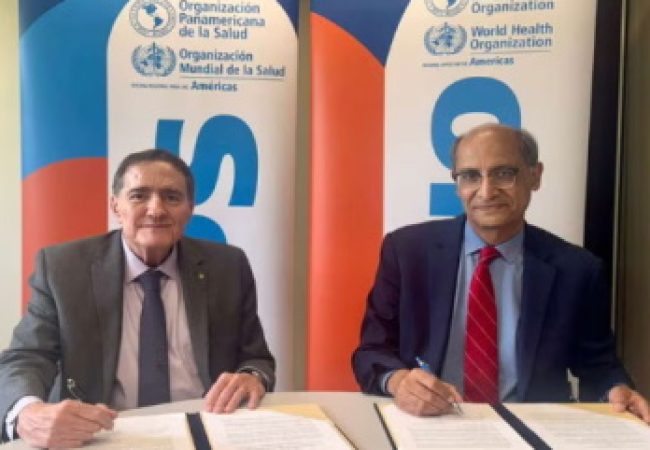
The agreement was signed during the 79th World Health Assembly, which ends here on Saturday, by PAHO Director Dr. Jarbas Barbosa and The Carter Center Vice President for Health Programs, Dr. Kashef Ijaz.
PAHO said that the partnership will support coordinated efforts to eliminate onchocerciasis transmission in the Region by 2030, while also advancing cooperation on malaria and lymphatic filariasis elimination initiatives on the island of Hispaniola, shared by Haiti and the Dominican Republic.
“Disease elimination is one of the most powerful expressions of equity in public health because these diseases disproportionately affect populations living in conditions of vulnerability, including remote and historically underserved communities,” said Dr. Barbosa. “This agreement reinforces the importance of regional solidarity, technical cooperation, and strong partnerships to reach the populations that need these services most.”
Onchocerciasis is a neglected tropical disease caused by a parasitic worm transmitted by blackflies that can lead to skin and eye damage, including irreversible blindness. While there is no vaccine to prevent infection, treatment with the antiparasitic drug ivermectin every 6 months for 12-15 years can help halt its transmission.
PAHO said significant progress has been achieved across the Americas over recent decades through sustained community-based interventions, surveillance, and cross-border collaboration.
The Carter Center has played a leading role globally in disease eradication and elimination efforts, including programs targeting Guinea worm disease, river blindness, trachoma, schistosomiasis, lymphatic filariasis, and malaria.
In the Americas, technical and financial support, including medicine donations and the work of the Onchocerciasis Elimination Program for the Americas (OEPA), in collaboration with PAHO and national authorities, has been instrumental in advancing elimination efforts.
The agreement signed builds on a long history of disease elimination efforts between PAHO and The Carter Center. We share a common vision of an America free from River Blindness, Lymphatic Filariasis, and Malaria, and we are grateful for PAHO’s leadership and commitment,” said Dr. Ijaz.
The agreement formalizes and expands longstanding collaboration between PAHO and The Carter Center and aims to improve coordination at regional and country levels, strengthen technical cooperation, and support integrated health interventions in affected communities.
The elimination of onchocerciasis is part of PAHO’s Disease Elimination Initiative, which seeks to eliminate more than 30 communicable diseases and related conditions in the Americas by 2030 through integrated approaches that strengthen health systems, surveillance, primary health care, and action on social and environmental determinants of health.