







































PORT OF SPAIN, Trinidad, CMC – The Central Bank of Trinidad and Tobago (CBTT)Tuesday said it is engaging directly with Republic Bank Limited following the public outcry that followed its decision to increase its banking fees from May 1, this year.
“We understand why citizens are frustrated, and we do not take this sentiment lightly. Over the years, we have closely monitored fees of commercial banks, and the data on this remains publicly available on our website,” said Central Bank Governor, Larry Howai.
“While our role as Regulator is defined by law, it is not a passive one. Citizens deserve a financial system that works in their interest, and the Central Bank will continue to advocate for that,” he added.
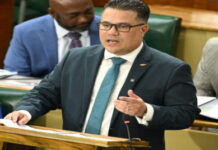
But former finance minister Colm Imbert told reporters that Republic Bank’s decision to increase banking fees was taken by the Bank’s newly appointed board, most of whom were selected by the current government.
“On the face of it,” Imbert said, the fee increase seems to be a response by the Bank to the new asset tax introduced by the Finance Minister Davendranath Tancoo during this year’s budget presentation.
Republic Bank, in a notice posted on its website, said the adjustments form part of “an ongoing review of our products and services” and that the changes affect a wide range of transactions, including cheque books, foreign currency drafts, manager’s cheques, and penalty fees tied to insufficient funds and overdrawn accounts.
Among the adjustments, the fee for official cheques or manager’s cheques will increase from TT$20 (one TT dollar = 0.16 cents) to TT$30, while the fee for foreign currency drafts will increase from TT$28.75 to TT$35. The cost of cheque books for commercial customers will move from TT$43 to TT$76 for a 100-leaf book.
Penalty-related charges are also set to increase, with the fee for non-sufficient funds transactions climbing from TT$34.50 to TT$57.50, and overdrawn account fees rising from TT$30 to TT$57.50. Late payment fees on both personal and commercial loans will also be increased, with some minimum charges rising to TT$100.
In its statement, the CBTT said that it acknowledges public concern generated by recent fee adjustments, adding that the Central Bank’s legislative authority to regulate fees is defined by Section 44A(1) of the Central Bank Act and is limited to fixing maximum and minimum interest rates, fees, and charges on loans, advances, and other credit facilities.
“This provision does not extend to general service fees such as deposit account fees, in-branch transaction charges, or ATM fees. The Central Bank’s authority in respect of those fees is exercised through its Market Conduct Guideline for Institutions Licensed under the Financial Institutions Act (2018), which establishes standards for transparency, disclosure, and the fair treatment of customers. Banks are expected to comply with the Guideline.”
The CBTT said it is committed to addressing the challenge of rising bank fees, especially given the level of profits banks have declared.
“As part of its efforts to influence decision-making in relation to fees, the Bank recently surveyed six commercial banks to obtain a comprehensive understanding of the philosophy and practices, including governance and controls, surrounding banks’ fees.
“A report based on the findings of the survey and recommendations for the way forward is being finalized for sharing with the industry and for implementation following consultation.”
The CBTT said that among the mechanisms it considers important is the availability of Basic Banking Accounts, which all commercial banks must offer under the Central Bank’s 2021 Simplified Due Diligence Guidelines.
These accounts are specifically designed to ensure that low-income individuals and micro-enterprises can access banking services with minimal documentation and at reduced cost. Citizens and small businesses affected by the current fee changes are encouraged to inquire about these options at their commercial Bank.
“In line with its broader consumer protection mandate, the Central Bank is actively reviewing the scope and Terms of Reference of the Office of the Financial Services Ombudsman (OFSO) to expand the support available to consumers in the financial system.
“The Bank also continues to intensify the reach of the National Financial Literacy Programme, so that citizens are better equipped to understand their rights, compare their banking options and make financial decisions that serve their own best interests,” it said informing citizens that its annual Comparative Schedule of fees for all commercial banks remains available on its website and that they “are encouraged to use this data to support informed decision-making”.






 and then
 Tuesday said it is engaging directly with Republic Bank Limited following the public outcry)