








































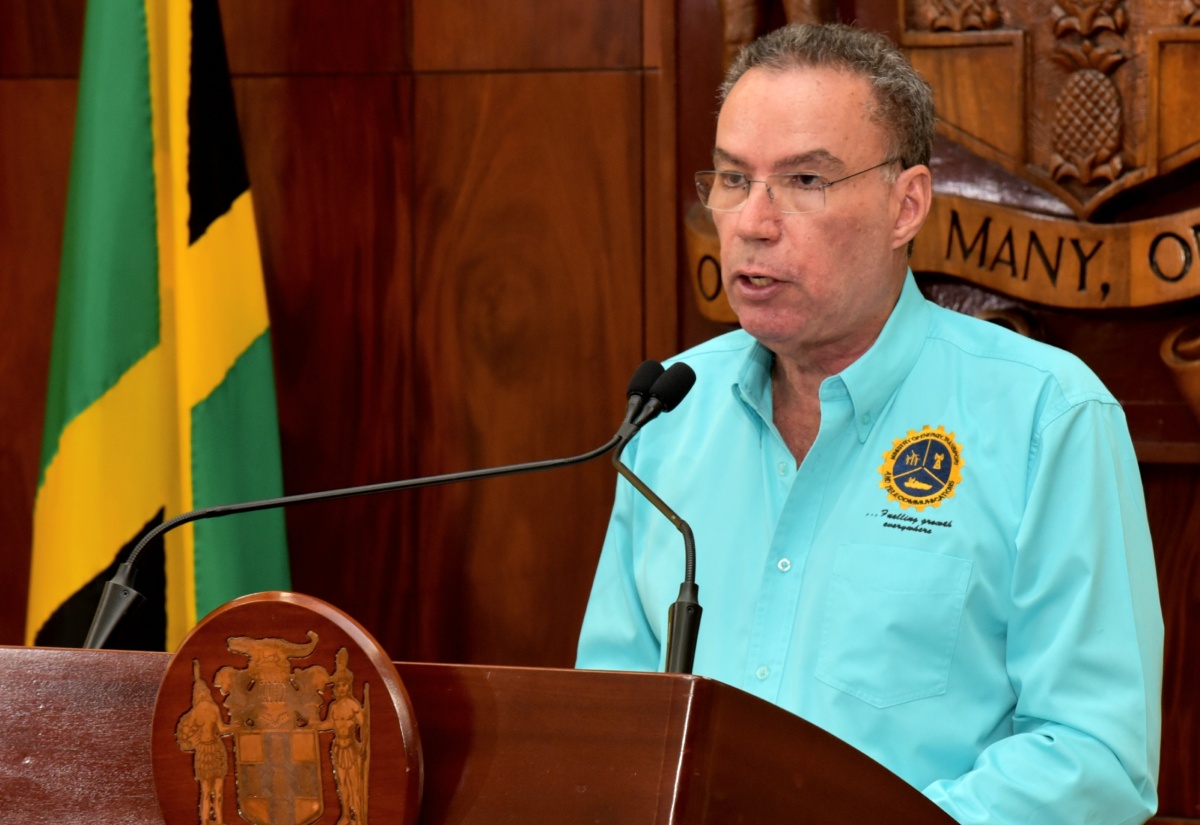
KINGSTON, Jamaica, CMC – Jamaica’s Energy Minister Daryl Vaz says a tiered pricing mechanism is being implemented, which will more closely align petroleum prices with global movements.
Vaz disclosed during a post-Cabinet press briefing on Wednesday,
He said that while the current mechanism has been effective in cushioning consumers, it has resulted in significant financial losses for the Government’s oil refinery, Petrojam, of J$1.3 billion to $1.4 billion in four weeks, which were not passed on to consumers.
He noted that if elevated prices persist until June 2026, it will cost the Government of Jamaica $11.8 billion, “which is unaffordable and unsustainable”.
Vaz said the Cabinet considered the revised tiered pricing mechanism, designed to allow for control and predictable adjustments, maintain consumer protection against smaller increases, and enable greater flexibility during larger global oil price shocks.
“Based on the war in the Middle East, it has become necessary to make changes to the pricing mechanism used by Petrojam to respond to the pricing uncertainty. This will allow Petrojam to be more agile and respond in a timelier manner to price volatility.”
“What does that mean? It means that the $4.50 cap cannot be sustained, and it means that we’ll have to have several different tiers of caps, probably three, that will speak to what’s happening in the market,” he added.
The Energy Minister explained that Jamaica continues to experience weekly increases in fuel prices, driven by upward movements in the US Gulf Coast benchmark, which serves as a primary reference for refined petroleum products in the region.
Vaz said between March 12 and April 8, the full increase in transport fuel prices averaged $49.20 per liter.
“That would have been the increase based on the change in the oil prices. However, only $18 of that $49.20 per liter was passed on to consumers based on the Government of Jamaica’s pricing cap at Petrojam at $4.50 per liter per week, up or down,” he stated.
“This was made possible through Petrojam’s pricing mechanism, which absorbed the remaining cost, amounting to approximately US$8.6 million, or $1.3 billion to $1.4 billion over the period. This was to cushion the impact on the Jamaican people,” he added.
Vaz stressed that Jamaicans would continue to see increases, as long as the war in the Middle East continues.
“We will do what we can do, but you must do what you need to do to understand that you need to conserve, starting today. Government is going to have to look at policies to limit movements, especially transportation movements,” he said.
“I don’t know whether or not we’ll go back to a COVID hybrid version of working from home, but something has to happen, because the level of traffic that I’m seeing on the road doesn’t show me that anybody realises that there’s a war and the price of fuel and oil is just continuing to go up and up and up,” he added.
He further stated that Cabinet will deliberate and that the Government will come up with plans as to how to conserve, “but it is 100 per cent the responsibility of every Jamaican to realise that we are in a major crisis as it relates to the price of oil internationally and, therefore, you need to take responsibility for your household and your business to see what you can do”.
“Despite the global market volatility, Jamaica’s energy security remains intact, supported by established finished product supply contracts and local refining capacity at Petrojam,” Vaz noted.
He added that the Government will continue to closely monitor international developments, maintain a balanced approach between affordability and sustainability, and take timely, measured decisions in the best interests of the Jamaican people.









 and then