


















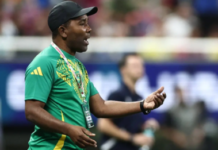






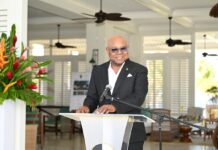
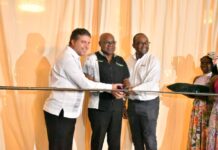



NASSAU, Bahamas, CMC – The leader of the main opposition Free National Movement (FNM), Michael Pintard, is standing his ground over plans to implement a national lottery should the party win the May 12 general election, even as Prime Minister Philip Davis and the Bahamas Christian Council raised objections.
Pintard had first announced the proposal to “introduce a national lottery for the benefit of the people of The Bahamas, a public initiative designed to generate dedicated funding for the advancement of education, sports, youth development, social intervention and culture”.
He said the lottery could generate major payouts and operate alongside existing private gaming operators, pointing to jurisdictions such as the Dominican Republic, Curaçao, Saint Martin, and Ghana as examples of similar models.
But Prime Minister Davis, who is leading the ruling Progressive Liberal Party (PLP) into the general election, told reporters, “It just speaks of desperation, and it’s really not for help.”
He said for the FNM leader to use the Dominican Republic as the model for his national lottery, “when the National Lottery of the Dominican Republic was proven to be such a failure, with corruption and fraud and the like, that’s the model he’s going to do, you know, one has to question, why is he wanting to have a national lottery?
“Is it for a slush fund, for corrupters and fraudsters, as the model that he clings to or embraces has proven to be? It seems to be gimmick, not thought out; the amount of Bahamians that is now in the gaming industry, how their lives will be impacted, how it impacts revenues for the country or any regards to the fact that that we collect tremendous amount of taxes from the gaming industry, it’s rather odd that you want to turn the Treasury into a gaming house,” he added.
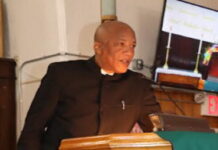
President of the Bahamas Christian Council, Bishop Delton Fernander, said the proposal risks placing a heavier burden on lower- and middle-income Bahamians.
“Sadly, the country voted on it under a previous administration, and it was a no, but it was still privatized in the country. And here we go again, a party that is offering itself to be the government is offering something the country has said no.”
Bishop Fernander said the council has been “adamantly against it.
“The data back then was showing that the base was not big enough to make it happen, and if that is not true, was it just so that they could privatize this to the select few? And so, the council has stood firm that we are adamantly against this because it mainly feeds on people experiencing poverty and the middle class. I can’t see someone or a party offering to be the government of all, wanting to base their whole way of collecting funds for education and sports on the back of the poor and those trying to rise to the middle class.”
Bishop Fernander said key safeguards remain absent, including rehabilitation programs for gambling addiction and systems to identify compulsive gamblers, warning that introducing a national lottery without addressing those gaps would deepen existing social challenges.
But as he addressed supporters on Tuesday night, Pintard said he found it strange that Prime Minister Davis, who was part of the government that went against the wishes of the electorate to regularise web shop gaming, is speaking out against a national lottery.
“Why would something potentially good for young people, for culture, for the environment, why would it be so troublesome to this prime minister and his government, since it was they who gave birth to the regularizing of gaming?” Pintard asked.
“Why would it be a problem for them all of a sudden to have a national lottery where the bulk of those resources is being administered through the government system? We can leave you to decide.”
Pintard reiterated that the revenue from a national lottery can help several people better their lives, adding that this plan seemed to “have bothered the PLP even though we said it would be transparent.
Despite the goals of this initiative, the PLP they start freaking themselves out. They don’t really care that there is a potential for millions more dollars to flow into areas that badly need funding. They didn’t seem to care that it could fund students with scholarships, even though many Bahamians tell the story of knocking on this government’s door, and because they weren’t the right color, they couldn’t get help,” Pintard added.
In January 2013, the then Perry Christie administration held a gambling referendum, asking voters whether they supported the regulation and taxation of web shop gaming and the establishment of a national lottery. Bahamians voted overwhelmingly against the measures, but the then-government went ahead and regularised web shops.








 and then
 , Michael Pintard, is standing his ground over plans to implement a national lottery)