








































BRIDGETOWN, Barbados, CMC – The Caribbean Development Bank (CDB) has welcomed the approval of the multi-million-dollar Climate Resilience of the Water Sector in The Bahamas project, describing it as a major investment designed to confront the country’s escalating climate-related water challenges.
The CDB said that the country is set to benefit from more reliable, climate-resilient water services through a comprehensive national initiative to protect its vulnerable freshwater resources and modernize critical infrastructure.
It said that these improvements will be made possible following approval by the Green Climate Fund (GCF) and that, as the accredited entity for the project, CDB led the project’s design and will oversee its implementation in partnership with The Bahamas’ Water and Sewerage Corporation (WSC) and the government of The Bahamas.
The CDB said funding for the initiative is estimated at US$65.2 million, comprising a GCF grant of US$37.506 million, a GCF concessional loan of US$12.546 million, a CDB loan of US$12.546 million, and an in-kind contribution of US$2.602 million from the WSC.
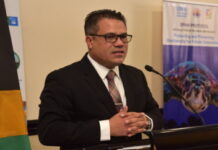
CDB’s Director of Projects, L. O’Reilly Lewis, said this investment represents a transformational opportunity for The Bahamas.
“By combining robust climate-resilient infrastructure with strengthened governance and data-driven management, we are helping to safeguard the country’s water security for generations to come. CDB is proud to partner with the GCF, WSC, and the Government of The Bahamas on this vital initiative,” Lewis said.
Director of the Green Climate Fund’s Department of the Latin America and the Caribbean Region, Kristin Lang, said this climate-resilient water sector project is GCF’s first single-country project in The Bahamas.
“Through this investment, we are strengthening country-owned solutions in Small Island Developing States where climate risks are highest. The project will strengthen climate-resilient water systems, build long-term resilience , and protect essential services in the face of intensifying storms and climate stress.
“The investment reflects GCF’s commitment to strengthen country ownership and be The Bahamas’ climate partner of choice,” Lang added.
The CDB said that, as one of the world’s most climate-vulnerable Small Island Developing States (SIDS), The Bahamas faces recurring threats to its fragile water supply systems from hurricanes, storm surges reaching up to 7 meters, prolonged droughts, and rising sea levels.
The region’s premier financial institution said that, with 83 percent of its landmass less than 5 meters above sea level and a heavy reliance on costly desalination, the national utility faces rising operational costs, frequent damage to water supply systems, and repeated service disruptions.
Groundwater lenses, the country’s only natural freshwater source, are also increasingly at risk due to reduced recharge, higher temperatures, and saltwater intrusion.
The CDB said the newly approved project will address these vulnerabilities by strengthening water governance, enhancing national water resource monitoring, and delivering major infrastructure upgrades across six islands: New Providence, South Andros, Mangrove Cay, North and Central Andros, Abaco, and Acklins.
Key interventions include climate-resilient wellfields, storm- and floodproof pumping stations, expanded storage, improved intersystem connectivity, and targeted water-loss reduction. Together, these measures will support resilient water security for more than 215,000 direct beneficiaries and bolster national climate resilience for another 199,000 people.
“This project closely aligns with CDB’s Strategic Plan 2026-2035, which places climate action, resilient infrastructure, and strengthened institutions at the center of the region’s long-term transformation,” the CDB said, adding it “looks forward to supporting the successful implementation of this landmark project and to helping build a more climate-resilient future for The Bahamas”.










 and then
  has welcomed the approval of the multi-million-dollar Climate Resilience of the Water Sector)