




































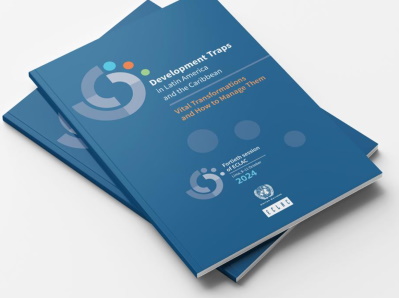
SANTIAGO, CMC – The Economic Commission for Latin America and the Caribbean (ECLAC) has released its 2025 Statistical Yearbook, outlining key trends in the region’s social, economic, and environmental landscape.
The report shows that multidimensional poverty remains a major challenge, affecting 27.4 percent of the population, with wide disparities among countries. It also highlights persistent gender inequality, with women aged 20–59 more likely to live in poverty than men, particularly in urban areas.
Economically, the region is projected to grow by 2.4 percent in 2025, though performance varies across countries. South America is expected to see modest growth, while Central America and Mexico are slowing. Caribbean growth is uneven, largely influenced by Guyana’s strong performance.
Trade activity is showing signs of recovery after earlier declines, but remains inconsistent across countries, with limited intraregional trade.
On the environmental front, ECLAC warned that the region remains highly vulnerable to climate change. In 2024 alone, 82 natural disasters affected more than 12 million people, caused over 800 deaths, and resulted in losses of US$21.8 billion.
The report also highlights ongoing deforestation, with forest cover declining from 53 percent in 1990 to 46 percent in 2023. Despite this, the region still holds about one-fifth of the world’s forests.
Air quality remains a major concern, with no country in the region meeting World Health Organization standards for fine particulate matter.











 and then
  has released its 2025 Statistical Yearbook, outlining key trends in the region’s social, economic, and environmental landscape)