


















UNITED NATIONS, CMC -The United Nations Secretary-General’s Special Representative for Haiti, Carlos Ruiz Massieu, says Haiti remains mired in a multidimensional crisis marked by weak institutions, political uncertainty, widespread gang violence, and overwhelming humanitarian needs.
However, he says a recent agreement by political groups offers “a moment of hope and progress for the Haitian people”.
Last month, Prime Minister Alix Didier Fils-Aimé told the Caribbean Media Corporation (CMC) that law enforcement in the French-speaking Caribbean Community (CARICOM) has been making “some serious inroads” into the gang areas, and he remained confident that elections would take place by year’s end.
The last presidential election took place in 2016 when Jovenel Moise was elected to office, but he was assassinated at his private residence overlooking the capital in July 2021.
Fils-Aimè said that the country is “moving forward” and that political parties, especially the major ones, signed an accord for stability and “to ensure that we are all going into the elections together”.
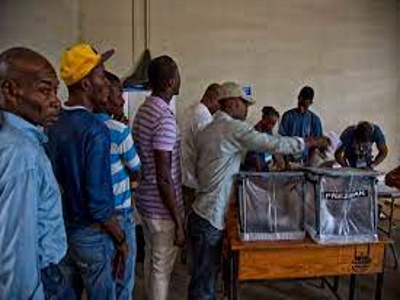
Since then, Haiti’s Provisional Electoral Council (CEP) said it has registered 320 political parties and organizations for the election and is expected to publish the final list of qualified entities on March 26. It is hoped that elections will be held later this year
Massieu, who is based in Port-au-Prince, said that the new National Pact for Stability and the Organization of Elections was a “significant political act” and that it met Haitian priorities for “the restoration of security, the organization of credible elections and the re-establishment of democratic governance”.
The UN said that a stable government will be essential for improving the daily life of the people of Haiti.
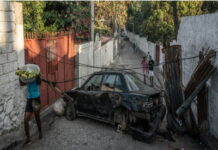
It said weak governance and the insecurity that leads to, has enabled armed gangs to expand territorial control, undermine the rule of law, and carry out atrocious human rights abuses, including more than 8,100 people being killed last year, kidnapping for ransom, the recruitment of children, and sexual violence with collective rapes of women and girls.
Gang violence has also led to the displacement of an estimated 1.5 million people, many of whom were already suffering from high levels of poverty – a situation which has been exacerbated by economic collapse.
Haiti’s protracted political transition is not an isolated domestic issue. Still, it has ramifications for regional stability, such as the trafficking of drugs and weapons by gangs and the migration of its citizens overseas.
The UN said the international community has consistently maintained that any durable political solution must be Haitian-led and that the authorities are being supported in their efforts to organise and hold municipal, parliamentary, and presidential elections.
The UN Security Council is the key multilateral organization, alongside the Organization of American States (OAS) and CARICOM, working with Haiti to address its longstanding challenges.
The Security Council, composed of 15 UN Member States, meets at least four times a year to discuss the situation in Haiti.
In its latest resolution, it urged “all Haitian stakeholders to come to an agreement over the future governing structure,” while expressing “deep concern about the lack of progress” in achieving a political transition.
The resolution also notes recent institutional steps, including the 2025 decree establishing specialised judicial bodies to address corruption, gang violence, and sexual crimes, reforms seen as essential to restoring the rule of law and political credibility.
Despite these initiatives, ongoing insecurity, the weakness of Haitian institutions, and political fragmentation continue to delay progress toward elections and constitutional governance.
The UN said it is playing a central political and coordinating role through the United Nations Integrated Office in Haiti (BINUH), and the mission led by Massieu has a mandate until January 2027.
The UN said its support to Haiti’s transition focuses on integrating political assistance with security, justice, and human rights initiatives, including the facilitation of a national dialogue and the constitutional process, including ensuring a peaceful transfer of power, as well as support for justice reform and specialised courts addressing corruption and mass crimes, assistance to judicial institutions, and prison administration.
In addition, the UN said there is support for designing a Haitian-led disarmament, dismantlement, and reintegration (DDR) programme as well as coordination with international partners to reduce community violence, monitoring, and reporting human rights abuses, including sexual violence.
The UN said 2026 comes with high expectations for the holding of long-overdue elections.
An electoral calendar sets the first round of legislative and presidential elections for August, with a second round, if necessary, held on December 6, coupled with municipal elections.
“To meet these deadlines, progress is needed to stabilise the security environment and create conditions conducive to holding a fair vote,” the UN said, adding it continues to facilitate dialogue, support elections, strengthen justice institutions, and promote accountability. Still, progress ultimately depends on Haitian stakeholders reaching a consensus.
“Political differences need to be overcome to improve security, reduce displacement, and avoid economic collapse. A credible political transition is essential for national recovery,” the UN added.



 and then