


































WASHINGTON, CMC – Amid the current turmoil worldwide, it is important that we not forget the urgent humanitarian and political crisis confronting the Haitian people.
For many years, the United States has been the principal destination for Haitians seeking refuge, security, and opportunity beyond their homeland. It has done so while contending with migratory pressures from other parts of the world that strain border systems, public services, local administrations, and domestic politics. In those circumstances, it is understandable that the present U.S. administration should seek firmer control over immigration policy.
The Caribbean should acknowledge that reality plainly. It is neither fair nor prudent to speak as though the United States has an unlimited obligation to absorb the consequences of Haiti’s prolonged collapse. Every state has both a sovereign right and a public duty to manage migration in an orderly way, with proper regard for its own resources and social stability.
Caribbean governments should also approach the issue with some humility. Our own record does not suggest any broad readiness to receive large numbers of Haitians.
The Dominican Republic, which shares the island of Hispaniola with Haiti, has for years responded to Haitian migration with increasingly restrictive measures. People may differ on aspects of those policies. But one fact is plain: a country closest to Haiti’s daily reality has concluded that its own capacity has limits, and that the pressures arising from Haiti’s collapse cannot be absorbed without serious domestic consequences.
Similar caution is evident within CARICOM. Haiti is a valued member of the Community, and there is sympathy across the region for the suffering of the Haitian people. But sympathy has not translated into any broad willingness to open borders widely to Haitian migration. The smaller Caribbean states lack the economic resilience, institutional strength, or social infrastructure to absorb significant inflows from a country as large and distressed as Haiti.
That is not indifference. It is recognition of hard facts. In several CARICOM countries, even modest migration inflows can place pressure on housing, education, health care, employment, and public order. Caribbean governments understand this only too well, and that understanding should make them more appreciative of the pressures felt in the United States.
Still, sympathy for the American position cannot settle the matter.
The issue before the United States Supreme Court is whether Temporary Protected Status should be ended for large numbers of Haitians while Haiti remains in a profound crisis. The question is not about the United States’ right to regulate immigration, nor about whether TPS was ever meant to be permanent. The real issue is whether Haiti is now in a condition that allows the safe and dignified return of substantial numbers of people. On any serious view of present realities, the answer is no.
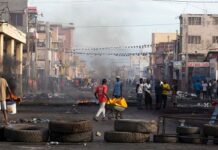
Haiti remains trapped in a crisis that is at once political, humanitarian, and criminal. Armed gangs continue to control or contest major areas. Public institutions remain fragile. Large numbers of people have been displaced. Daily life is marked by insecurity and fear. The country has not recovered even the minimum stability that would justify confidence in large‑scale return.
Nor is it true that the international Community has ignored Haiti. The problem is not awareness but the absence of an effective response equal to the scale of the crisis.
The United Nations Security Council has acted. The Secretary General of the Organization of American States (OAS) has produced a roadmap. CARICOM’s Eminent Persons Group helped facilitate the arrangements that led to the formation of the Transitional Presidential Council. Yet the security presence remains too small and underfunded. The OAS roadmap has not attracted the mobilisation of resources it requires. The mandate of the Haitian Transitional Council ended without resolving the major issues it was meant to address, including basic security and a credible path to elections.
Haiti has since drifted back into rule by decree under an unelected administration, amid continuing political discontent and the persistent dominance of armed gangs.
What is required now is not vague appeals to international goodwill, but proper financing and execution of measures already identified: stronger security support, firmer action against the gangs’ arms supply, practical backing for political transition, and economic and humanitarian assistance directed inside Haiti itself.
The effort should be aimed at reducing the causes of flight in Haiti, not only debating which countries must bear the consequences.
That is the wider context in which the present American legal proceedings should be judged. The United States is entitled to say that it has carried a disproportionate share of Haiti’s burden. It is also entitled to seek a more orderly immigration system. But if Haiti is still in no condition to safely receive substantial numbers of returnees, then caution is not weakness. It is sound judgment.
Haiti has not lacked plans, meetings, mandates, or declarations. What it has lacked is a decisive and coherent effect. The country resembles an outclassed boxer in the ring, taking blow after blow, bloodied but still upright. From time to time, those at ringside keep him from falling. But no one has yet found a way to stop the beating and restore his strength.
That image, stark though it is, captures the present truth. Haiti is still standing, but standing is not recovery. Survival is not stability. Endurance, however admirable, is not a substitute for effective policy.
This is why the present moment calls for realism. The United States deserves understanding for the burden it has borne. The Caribbean should be candid about its own inability to absorb a larger Haitian exodus. But neither reality alters the essential fact that Haiti is still in no condition to sustain substantial repatriation without risking deeper disorder.
The answer, therefore, does not lie in moral reproach, nor in inviting small Caribbean states to assume burdens they plainly cannot carry. It lies in recognising that Haiti’s recovery must be pursued where it can be most effective: in security, political legitimacy, humanitarian relief, and economic support within Haiti itself.
Until Haiti is made safer, better governed, and more capable of sustaining its own people, prudence requires that protection abroad not be withdrawn before conditions at home justify return.
*(The author is the Ambassador of Antigua and Barbuda to the United States and the OAS, and Chancellor of the University of Guyana)







 and then