



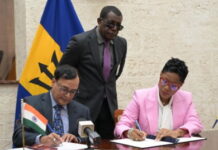










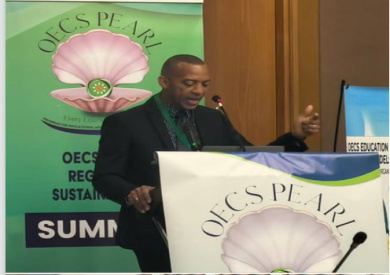
ROSEAU, Dominica, CMC – Education officials from across the Organisation of Eastern Caribbean States (OECS) are meeting here to discuss the transition of the OECS PEARL from a project to a permanent system change.
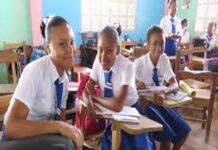
The OECS PEARL is a four-year programme that seeks to advance progress towards the goals of the OECS Education Sector Strategy (OESS) by increasing access and improving student learning in basic education.
With its vision “A quality education for every child”, the Global Partnership for Education (GPE) will help optimise education systems so that all children can learn, including those marginalised by poverty, ethnicity, disability, and displacement, and put gender equality at the heart of what the partnership does and how it operates.
The programme will be implemented at the primary level in the nine English-speaking OECS member states, with an emphasis on the four Windward Islands – Dominica, Grenada, St. Lucia, and St. Vincent and the Grenadines – that belong to the GPE group of developing country partners.
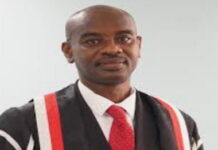
Project Manager of the Education Development Management Unit at the St. Lucia-based OECS Commission, Rafa Gordon, has called for greater emphasis on children in formulating policies under the project as he addressed educators from the sub-region here.
“Where the data that we have, the learning loops that we create, the professional development that we engender and the classrooms that we build are part of a learning system that function in ways that are interdependent and ultimately put the focus on that most important element of the education system, which is sometimes very much the most forgotten element of the education system, and what is that, the child,” he told the meeting which ends on Thursday.
“All of what we’re doing here is for naught if it does not benefit the child. And so how do we ensure that all of this effort, all of this investment, the millions of dollars that have gone into the work that we’re doing result in benefits for the child?
“That is the challenge to you, you OECS experts. You have all the experience, understanding, and sensitivity required to make a difference. You have power in this room. Are we going to harness that power?
“Are we going to take that power and transform it into the kinds of decisions that we need so that we leave here confident that we’re moving in the right direction?” said Gordon.
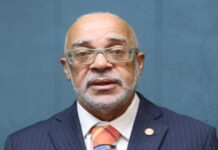
Permanent Secretary in the Dominica Ministry of Education, Robert Guiste, highlighted the essential role of the OECS Pearl Project in establishing educational standards within the sub-region.
“We are working to ensure that the Pearl does not remain a chapter in our history. It must become a standard. The OECS region has consistently demonstrated that collaboration is our greatest asset.
“Through harmonisation, shared public goods, and coordinated reform, we have achieved efficiencies and innovations that no single state could accomplish alone. This summit strengthens that tradition of unity.”
Guiste said that the sub-region is deeply encouraged by the structure of the phase roadmap, which involves national reflection and readiness, assessment, technical blueprinting, governance review, partner alignment, plan finalisation, and ultimately political endorsement by the Council of Ministers.
“This is a structured pathway to performance. Without deliberate institutionalisation, our progress will be vulnerable to burnout, fatigue, budget compression, and shifting priorities. But with deliberate action, we can secure multi-year commitments, harmonise policy frameworks, and embed these assets into everyday school and ministry operations,” Guiste added.





 and then
  are meeting here to discuss the transition of the OECS PEARL)