




































LONDON, CMC – The London-based Privy Council Thursday ordered a fresh assessment of damages against a junior government minister after it set aside the award of damages made by the Court of Appeal in Trinidad and Tobago.
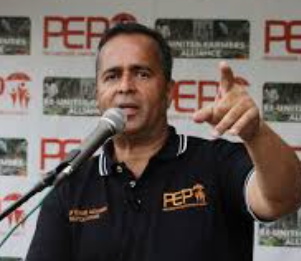
But the Privy Council, the country’s highest and final court, upheld an appeal that had been filed by a businessman, Andrew Gabriel, against Phillip Alexander, the political leader of the Progressive Empowerment Party (PEP) and a junior minister of housing.
Gabriel claimed that a series of statements published by Alexander had defamed him. The first statement was made on February 8, 2017, during a radio programme called “The Ground Report,” broadcast on a local radio station.
The broadcast was also streamed (with video) on Alexander’s personal Facebook page, where it could be watched live or viewed later. The second statement was posted on Alexander’s Facebook page later that day, and Gabriel claimed that both statements accused him and his family of corrupt and criminal conduct.
Gabriel, a member of the Syrian/Lebanese community in Trinidad and Tobago, is also the managing director of an insurance brokerage. He was briefly a Senator in the Upper House of Parliament in 1995, having been appointed by the then United National Congress (UNC) government. He later became a supporter of the People’s National Movement (PNM).
When the matter went to trial in October and November 2018, Justice Gobin ordered Alexander to pay general damages of TT$525,000 (One TT dollar = 0.16 cents) and further aggravated damages of TT$250,000.
But the Court of Appeal allowed Alexander’s appeal in part, holding the view that the trial judge was plainly wrong to find that the first statement was defamatory of Gabriel and that while the second statement was defamatory of him, it did not also defame Gabriel’s family as the judge had found.
The Court of Appeal found that none of the subsequent statements was defamatory of Gabriel; and that the judge’s order should be set aside and replaced by an order to pay “nominal damages” of TT$10,000.
But after hearing the matter on December 10 last year, the Privy Council Thursday ruled that it will allow the appeal and set aside the award of damages made by the Court of Appeal.
“The case will be remitted to the High Court for a fresh assessment of damages for the injury to Gabriel’s reputation and feelings caused by the first and second statements and aggravated by Alexander’s malicious motives and subsequent conduct.
“The assessment should be made by a judge other than the trial judge but based on the evidence given at the trial and the findings made by the trial judge where these have not been overruled on appeal,” the Privy Council ruled.
The Privy Council, in its ruling, noted that deciding whether words are defamatory of a person has two stages. It said that the first stage is to decide what meaning the words complained of would be understood to bear by an ordinary, reasonable reader (or hearer).
“For this purpose, it is assumed that the words would be understood to have a single meaning. The words must be considered in their context, having regard to the nature of the publication in which they appeared.”
The five-member Privy Council said that the second stage is to decide whether this meaning would lead ordinary, reasonable people to think worse of a person or to treat the person less well.
“In Lord Atkin’s classic formulation…would the words tend to lower the plaintiff in the estimation of right-thinking members of society generally?” the Privy Council added.








 and then