
























BASSETERRE, St. Kitts, CMC – Caribbean Community (CARICOM) leaders were gearing up on Wednesday for talks with United States Secretary of State, Marco Rubio, aware of Washington’s desire to have Cuba change its decades-old communist policies and move towards a capitalist system.
Rubio, who is also expected to hold bilateral meetings with the leaders of Trinidad and Tobago, Guyana, and Haiti, has previously said that economic reforms could offer the Cuban government a path to easing US pressure.
But Rubio, the son of Cuban immigrants who moved to the United States in 1956, declined to spell out specific conditions but suggested the regime must allow Cubans greater economic freedom, not just political reforms, if it wants relief from Washington’s tightening grip.
As they gathered on the first working day of their four-day summits, some regional government leaders were mum about the outcome of their deliberations with US senior officials. In contrast, others were guarded in their response.
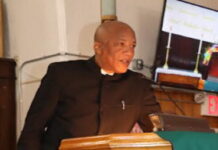
“We expect emphasis on continued cooperation between CARICOM countries…and the United States of America, of course, we are basically neighbours and because of that, what transpires in one country affects us,” St. Kitts and Nevis Foreign Affairs Minister Dr. Denzil Douglas told reporters.
Douglas, a former prime minister, said, “We want to make sure that critical issues, particularly our views on Haiti, our views on other countries in the Caribbean where there seems to be at the moment some uncertainty, we want to have clarity on those issues,” Douglas said.
He said CARICOM wants to ensure the humanitarian crisis is quickly addressed, noting that many regional countries have members of their population studying in that country.
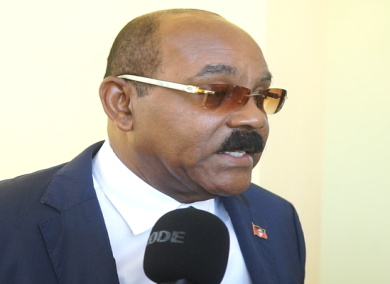
Antigua and Barbuda Prime Minister Gaston Browne told reporters he hoped for a reset in relations with Washington.
“I will say closer relations between the Caribbean and the United States. So we hope that this will be a reset, one in which there will be strong relations, one in which the United States will understand the vulnerabilities of Caribbean countries, the needs of Caribbean countries, and one in which they will work with us to adjust those vulnerabilities while at the same time strengthening our common security interests and ensuring that this hemisphere remains a zone of peace, Browne said.
” I know some people don’t like to hear it, but that is what keeps us united, and that is what helps to fuel growth and development within the Caribbean region.”
Asked whether he was disappointed at the remarks made by the Trinidad and Tobago Prime Minister Kamla Persad-Bissessar about the region being a zone of peace, Browne said, “Well, I think Kamala has expressed some disappointments, and I can understand to some extent.
“She’s not exactly wrong that we have not been as reliable as we ought to be as Caribbeaners in defending each other. She’s absolutely right with that. As Caribbean countries and Caribbean people, we need to be more empathetic toward one another and stand by each other through thick and thin.
“So from that standpoint, I respect her position. But outside of that, I would have said that the Caribbean has proven to be a very reliable partner, especially a reliable trade partner for Trinidad and Tobago, and I felt that she probably could have issued a more balanced statement.”
As it relates to Cuba, where Persad-Bissessar expressed her desire for an end to the Communist system, Browne said, “We all defend democracy, and there’s no doubt about it.
“I can’t fault her for making that statement. The Cubans, you know, they consider their revolution to be sacrosanct, so clearly there’s some misalignments there. And it’s not for me to condemn any particular governance philosophy. Still, it is well known that we are all rooted in democracy and would like to continue to see, you know, democracy practically exist in all countries, where people have all the fundamental rights and freedoms.
“Although I have to admit to that in some democracies, and based on the geopolitical ethos at this time, those fundamental human rights principles are being eroded. But you’re talking about a country together with Guyana, Jamaica, and Barbados, which had defied the United States for years and established diplomatic relations with Cuba.
“That’s true, but you’re dealing with a regime at this point that, you know, is not taking a soft position on these issues. If we’re going to be honest, the United States is very brutal about having changes in Venezuela and Cuba, and we have to be pragmatic in all of our dealings.
“We are very small, vulnerable countries, and whereas there may be differences in terms of how we see these issues, one just has to be pragmatic and to get the best possible result. And certainly in the case of Cuba,” Browne said, adding, “one of the things that we want to see is some immediate humanitarian relief for the Cuban people.
“That is the primary objective at this point in terms of the, let’s say, political changes, the ideological changes that some may be trying to effect. I don’t know that we have the power to stop it, and we have to see what happens over the next few days and weeks.
My understanding is that negotiations are taking place, and it’s not for us to be preemptive. We have to see where those discussions go. And again, to be very sensible and pragmatic about a long-lasting solution that is mutually acceptable to all”.
Browne also defended the CARICOM position on Cuba in light of reports that some Cuban diplomats are disappointed by the regional grouping’s lack of support.
If it is indeed correct that negotiations are taking place between Cuba and the United States, then any definitive statement at this time without knowledge of what those discussions entail will be fraught with danger.
“What we do know is that the current US sanctions are creating significant hardships for the Cuban people. And from a CARICOM standpoint, certainly from an Antiguan and Barbadian standpoint, we are very concerned, and we would like to see some relief.
“If there could be some, let’s say, reduction of those stringent measures to bring some relief to the Cuban people as soon as possible,” he added.







 and then
  leaders were gearing up on Wednesday for talks with United States Secretary of State, Marco Rubio)