







































GENEVA, A United Nations document published here on Friday details the brutal and widespread trafficking of children by Haitian gangs, warning their actions threaten not only the well-being of today’s children but also of future generations.
The report, issued jointly by the United Nations Integrated Office in Haiti (BINUH) and the UN Human Rights Office (OHCHR), states that most of the 26 gangs currently operating in Haiti are involved in child trafficking.
It describes the different forms of exploitation to which children are subjected, ranging from running errands, monitoring security forces, or collecting extortion payments, to more violent acts like destruction of property, kidnappings, targeted killings, and sexual violence.
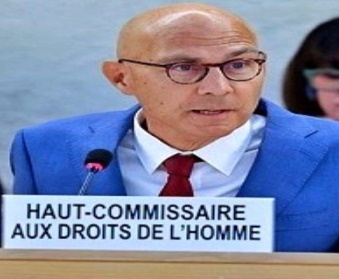
“Children in Haiti are being robbed of their childhoods and their futures. The impact and long-term consequences of child trafficking are devastating for the victims and their families, as well as for the stability of the country,” said UN High Commissioner for Human Rights, Volker Türk.
There is no comprehensive data on the number of children trafficked by gangs. However, in 2024, the UN estimated that more than 500,000 children were living in areas under gang control and that gang violence had forced more than 1.4 million people to flee their homes. More than half of them are children.
The report emphasises that both structural factors, such as poverty, weak institutions, and social exclusion, and situational factors like armed violence, contribute to an environment where children are increasingly at risk of being trafficked by gangs. They are either enticed by what they perceive as power, social status, or protection, or lured through violence, threats, food, or drugs.
“This risk is particularly acute for children from extremely poor and marginalized families, as well as those living on the streets or in displaced persons’ sites,” according to the report.
While acknowledging ongoing efforts by State authorities, civil society, and the international community, the report underscores that current responses are insufficient, fragmented, and largely under-resourced.
The report also states that despite some initiatives, insufficient attention is given to preventing child trafficking before it occurs, including by addressing the economic, social, and educational root causes that place children at risk of trafficking, while also ensuring accountability for traffickers to prevent future violations.
It highlights that law enforcement officials often view children trafficked by gangs as perpetrators rather than victims. In some circumstances, the report notes that some children accused of gang association have been summarily executed by police officers or killed by so-called self-defence groups.
“For the immediate and long-term future of Haiti, it is crucial that national authorities and their international partners work hand-in-hand to build stronger communities and social protection mechanisms. Children must be at the center of our response to the security crisis in Haiti,” said Carlos Ruiz Massieu, Special Representative of the UN Secretary-General in Haiti and Chief of BINUH.
To achieve this, BINUH and the UN Human Rights Office call for a comprehensive, human rights-centered strategy built around seven pillars: expanding social protection programs for vulnerable families in the capital, reinforcing schools as protective spaces, developing child-friendly spaces outside schools, increasing youth vocational and employment opportunities, strengthening rights-compliant law enforcement, prioritizing rehabilitation over punishment, and improving accountability for child traffickers.
Türk added that it is essential that the newly-created Gang Suppression Force ensures that children’s rights are fully respected during the planning and conduct of operations against gangs, in accordance with international human rights law.
“It is equally crucial that national and international authorities focus on curbing the illicit flow of arms pouring into Haiti. The UN arms embargo must be enforced without delay if we want to stop the never-ending cycle of violence,” he added.











 and then