








































CASTRIES, St. Lucia, CMC – The St. Lucia government reaffirmed the country’s full compliance with the European Union (EU) tax good-governance standards on Wednesday, underscoring a reform process that has strengthened transparency, modernised the tax framework, and reinforced St. Lucia’s standing as a responsible and cooperative international financial jurisdiction.
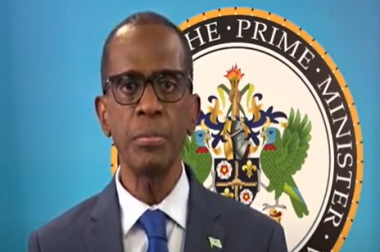
“St. Lucia has demonstrated that small states can meet the highest international standards while safeguarding their economic sovereignty. Our removal from the EU lists was not incidental,” Prime Minister Phillip J Pierre said.
“It was the result of deliberate, responsible legislative action and sustained engagement. We remain firmly committed to transparency, fairness, and cooperation within the global financial system,” he added.
St. Lucia was initially placed on the European Union’s list of non-cooperative jurisdictions in December 2017. Following high-level commitments to address identified concerns, the country was moved to the EU’s state-of-play (Annex II) list in March 2018.
After implementing comprehensive legislative and regulatory reforms, St. Lucia was officially removed from all EU tax-related lists in February 2021, having fulfilled all commitments to the EU.
“Since that time, St. Lucia has maintained its cooperative status through successive bi-annual reviews conducted by the EU Council,” the Phillip J Pierre government said in a statement, adding that the reforms undertaken were substantive and structural.
It said they would abolish preferential tax regimes deemed potentially harmful, including elements of the former International Business Company framework and related offshore incentives.
The modernisation of the corporate tax system through the introduction of a territorial regime, coupled with strict economic substance requirements to prevent artificial profit shifting and the enactment and strengthening of Economic Substance legislation to ensure that companies benefiting from tax provisions demonstrate real commercial presence and activity within St. Lucia, had also been undertaken.
The statement said the government also undertook the enhancement of transparency measures, including full participation in the OECD’s Common Reporting Standard for automatic exchange of financial account information and compliance with Global Forum standards on exchange of information upon request as well as the alignment with Organisation for Economic Cooperation and Development (OECD) Base Erosion and Profit Shifting (BEPS) minimum standards, including transfer pricing rules and anti-abuse measures.
“These reforms were implemented in close collaboration with international partners and in keeping with evolving global standards on tax fairness and transparency.”
The government said that the successful completion of these reforms has reinforced St. Lucia’s credibility among international partners, financial institutions, and investors.
“By eliminating harmful tax practices and strengthening regulatory oversight, the country has positioned itself as a transparent, rules-based jurisdiction aligned with OECD and EU principles.”
The government said it views tax compliance not merely as a listing exercise, but as part of a broader strategy to protect correspondent banking relationships, safeguard access to international financial markets, support investor confidence, and promote sustainable economic growth.
“St. Lucia continues to monitor developments in international tax policy, including evolving OECD and EU standards, to ensure ongoing compliance and policy coherence,” the statement said, noting that the next scheduled review of the EU list of non-cooperative jurisdictions is expected in October 2026.
“St. Lucia remains fully compliant and committed to maintaining its cooperative status. The government of St. Lucia reaffirms its dedication to responsible fiscal governance and constructive international engagement, recognizing that transparency and sound regulation are integral to national development and long-term economic resilience.”









 and then
  tax good-governance standards)