





































PORT OF SPAIN, Trinidad, CMC – The Trinidad and Tobago government says its main priority now is to fix the inter-island ferry system between the two countries, even as it acknowledged the ongoing efforts to create a regional transport system interconnecting Caribbean Community (CARICOM) member states.
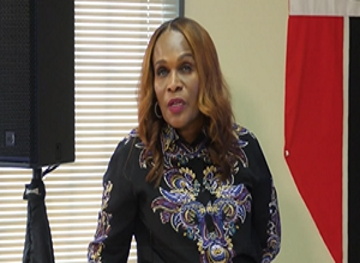
“Our first order of the day is to get that sea bridge between Trinidad and Tobago as right as we could get it,” Minister of Works and Infrastructure, Jearlean John, told a news conference at the headquarters of the ruling United National Congress (UNC) on Sunday.
“We would love to do the regional ferry, but that is not before the Cabinet at this time or even before the board of the Port Authority,” she told reporters.
“So it is something I am sure will happen,” she said, insisting that Trinidad and Tobago’s participation in the regional ferry system has not been ‘scrapped.
“No, not at all, not at all,” she said at the news conference where it was disclosed that the Urban Development Corporation of Trinidad and Tobago (UDeCOTT) had received 965 Expression of Interest submissions for projects listed in the government’s sweeping Revitalisation Blueprint.
CONNECT Caribe, a subsidiary of Barbadian maritime company Pleion Group Inc, which said it had been working on a regional ferry service, had announced plans to begin its regional ferry sailings within the first quarter of 2025.
The company, which had initially given an August 2024 deadline, said then that the unsuitability of the recommended vessels, among other things, led to the delay.
Connect Caribe said this would include three vessels: an 800-passenger cruise ship, a 400-passenger fast ferry, and a dedicated cargo vessel, with plans to include routes to Antigua and Barbuda, Barbados, Dominica, Grenada, St Lucia, St Kitts and Nevis, St Vincent, and Trinidad and Tobago.
The initiative by CONNECT Caribe is separate from the ongoing work by the governments of Guyana, Barbados, and Trinidad and Tobago to commence a new ferry service among the three Caribbean states.
Meanwhile, John told reporters that several countries, including the United States, France, the Netherlands, India, the United Kingdom, Peru, South Africa, Belgium, and China, had expressed some interest in the 129 projects under 12 development nodes the government unveiled in its multi-billion-dollar investment programme last December.
She said she had received a letter from the UDeCOTT’s chairman, Shankar Bidaisee, informing her that the process she described was very competitive.
According to that letter, there have been double-digit submissions for each category listed in the plan, ranging from luxury waterfront real estate development to national prison security infrastructure development.
“This was a blowout for Trinidad and Tobago, we positioned ourselves well,” John said, adding, “I was very surprised about this because I felt the social projects, those that may be linked with national security or the socially displaced in the hospitals to an extent, were not going to be taken up, but we got 54 submissions”.









 and then