



































ST JOHN’S, Antigua, CMC — With fears circulating among non-national residents that the ongoing population census could be used to identify and deport undocumented individuals, the Director of the National Bureau of Statistics has moved to assure the public that all census information is legally protected and cannot be shared with immigration or law enforcement authorities.
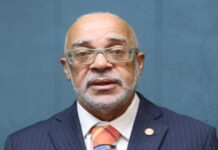
Director Statchel Edwards, speaking in a recent interview, stressed that census data is collected solely for statistical purposes and is shielded by strict confidentiality provisions under the National Bureau of Statistics Act 2024.
“All information collected during the census is strictly confidential. It’s not shared with any other entity, agency, immigration, inland revenue, police, or any other government department or any external organization,” Edwards said. “By law, your individual information cannot be shared with any other entity.”
The issue gained public attention last week after Member of Parliament for St. Phillip’s South, Sherfield Bowen, suggested that some non-nationals fear the census could serve as a “Trojan horse” for state authorities seeking to identify non-compliant residents.
Edwards responded by underscoring the severe penalties faced by census workers who violate confidentiality agreements, noting that breaches could result in heavy fines or imprisonment.
“The legal mandate that governs us is the National Bureau of Statistics Act 2024, which outlines actions that can be taken against persons who violate the confidentiality clause within their contracts,” he explained. “This includes penalties that could involve years in prison.”
He added that census workers found guilty of breaching confidentiality may also face fines of up to EC$10,000.
According to Edwards, no government department has access to census data, as the bureau operates on a standalone IT platform separate from other government systems.
“No other government department or entity will see the data that we collect,” he said. “The server and IT platform that we use are not shared with any other government department.”
Seeking to reassure residents further, Edwards pointed to Antigua and Barbuda’s long history of census-taking, noting that the same confidentiality standards have been applied for decades.
“We conducted censuses in 2011, 1991, in the 1970s, and even before that,” he said. “These principles and concepts are not new. They have guided census-taking in Antigua and Barbuda and across the region for decades.”
Edwards emphasized that census officials are not concerned with residents’ immigration status.
“We do not care about your legal status in Antigua and Barbuda,” he said. “By law, we do not report that information to any entity. Our objective is to capture a demographic snapshot of the country at a particular point in time.”
The census currently covers 160 enumeration districts nationwide, with approximately 200 enumerators conducting door-to-door interviews. Each district comprises between 100 and 125 households.
Edwards also acknowledged concerns about the visibility of public awareness efforts surrounding the census, describing them as “an opportunity to strengthen our communication and advocacy.”
Census workers can be identified by four official items: a photo identification card issued by the census office, an official census vest bearing the 2025 Population and Housing Census logo, an official census bag, and a census tablet. Enumerators can also present a formal letter of engagement from the census office upon request.








 and then