


























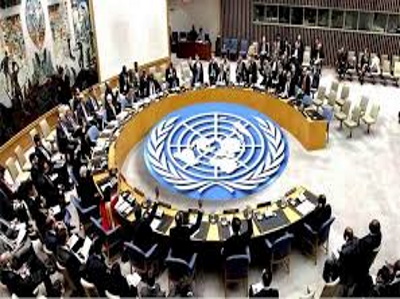
UNITED NATIONS, CMC – The United Nations Security Council has extended the mandate of the United Nations Integrated Office in Haiti (BINUH) for one year to 31 January 2027, even as it condemned Haitian authorities Thursday for the lack of progress in achieving a political transition.
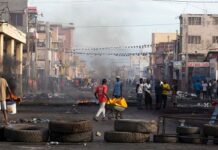
The Security Council condemned the upsurge in violence in the French-speaking Caribbean Community (CARICOM) countries in the strongest terms, pointing to human rights violations and abuses, including sexual violence against women, men, and children, as well as human trafficking, migrant smuggling, killings, and the abduction of children by armed gangs.
The council resolution was co-sponsored by the United States and Panama and was adopted unanimously.
United States Ambassador Jennifer Locetta said that the Security Council had “made another decisive step towards the stabilisation of Haiti,” praising Panama for its work in helping the UN body achieve unanimous adoption of “this important resolution.
“The United States maintains its unwavering support for Haiti’s stability and security. Prime Minister Fils-Aimé’s tenure remains integral to advancing efforts to combat terrorist gangs and stabilize the country. The current violence caused by gangs can only be stopped with consistent, strong leadership and with the full support of the Haitian people,” she said.
The representative of Haiti welcomed the resolution as reflecting “a more integrated understanding of current challenges, and above all, the need to deliver concrete results”.
“Our objective is clear,” he said, noting the need to “protect the population, reduce violence, restore the rule of law and create the conditions for lasting institutional stability”.
Trinidad and Tobago, who spoke on behalf of the Caribbean Community (CARICOM), said, “We fear that the current impasse within the Haitian Transitional Presidential Council, following the inconclusive efforts of some members to dismiss the Prime Minister, renders more complex an already fraught governance transition process.”
China’s representative expressed grave concern over the continued flow of illegal weapons into Haiti, urging all parties, particularly the principal source countries of arms and ammunition, to adopt concrete measures in border control and the regulation of guns and support the active role of the sanctions committee, BINUH, the UN Office on Drugs and Crime (UNODC), and other bodies.
The adoption of the resolution comes as some members of the Transitional Presidential Council in Haiti moved to dismiss Prime Minister Alix Didier Fils-Aimé on 21 January, with the mandate of that Council to end on 7 February.
Haiti faces a complex set of challenges, including gang violence, political instability, and a humanitarian crisis, and the UN’s operational involvement in Haiti dates to the departure of then-president Jean-Claude Duvalier in 1986, which was followed by the holding of a democratic election in 1990 and then a military coup in 1991.
The UN said it has since remained deeply engaged in Haiti through successive peacekeeping and political missions.
Established in 2019, BINUH supports the Haitian authorities in strengthening political stability, good governance, and the rule of law, while promoting human rights and coordinating international assistance.
In unanimously adopting the resolution on Thursday, the 15-member Security Council has tasked the Special Representative of the Secretary-General in Haiti with playing “a good offices and coordinating role, including in promoting accountability, as well as respect for human rights, the political process and the rule of law”.
The text also revised the mandate of BINUH to undertake six key tasks “in an integrated manner with all UN entities in Haiti”.
These tasks include “utilize good offices to facilitate inter-Haitian national dialogue” in support of the constitutional and political process in Haiti, and supporting the Haitian authorities in organizing and holding municipal, parliamentary, and presidential elections in 2026 to “achieve a peaceful transfer of power to elected Haitian officials”.
BINUH is also tasked with helping the Haitian authorities reduce community violence, including in the design of a Haitian-led disarmament, dismantlement, and reintegration programme, and support for safe exit, voluntary disengagement, rehabilitation, and reintegration pathways for individuals, particularly children, formerly associated with gangs.
The UN Security Council says that the new mandate also reflects the recent establishment of the Gang Suppression Force (GSF), with the first contingents expected to arrive in the country in April.
The GSF’s mission is to restore state authority and public order, reduce gang territorial control, secure critical infrastructure, and support the Haitian people as they work toward a return to elected governance and long-term stability.
Last September, the UN Security Council authorised the deployment of the new international force to replace the struggling Kenya-led Multinational Security Support (MSS) mission, to restore state authority and public order, reduce gang territorial control, secure critical infrastructure, and support the Haitian people as they work toward a return to elected governance and long-term stability.
In close coordination with the GSF and relevant international organizations, BINUH is asked to “assist the Haitian authorities in addressing prolonged pretrial detention through support to relevant Haitian institutions and support the Haitian judiciary in its regular monitoring of the functioning of the courts and provide advisory support for its handling of high-risk individuals, as appropriate”.
BINUH will also “monitor and report on cases of gang violence, criminal activities, and human rights abuses and violations, including sexual violence against all women, girls, men, and boys, including by maintaining dedicated capacity for protection advisers”.
Locetta said Haiti’s many supporters must remain unwavering in their commitment to the country’s future, adding, “BINUH will be an integral part of international efforts to restore stability in Haiti.”










 and then