



































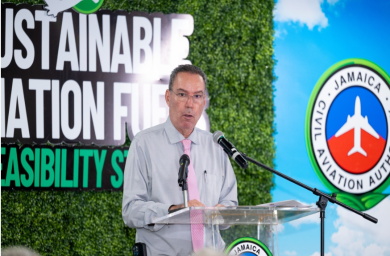
KINGSTON, Jamaica, CMC – Jamaica has launched a sustainable aviation fuels (SAF) feasibility study aimed at reducing carbon emissions and strengthening climate resilience in the sector.
The study, managed by UK International Climate Finance, will deliver the first structured, evidence-based assessment of Jamaica’s SAF potential. It will examine available feedstocks, existing energy and fuel infrastructure, aviation demand, export prospects, and the wider policy, regulatory, and investment environment, while also addressing challenges of scale, cost, and competitiveness.
Energy, Transport and Telecommunications Minister, Daryl Vaz, speaking at the official launch at the Jamaica Civil Aviation Authority (JCAA) headquarters, said that the initiative marks the beginning of a national conversation on clean energy, Jamaica’s role in global aviation, and long-term climate resilience.
He noted that the study aligns with the government’s national development priorities, particularly supporting the transition to a low-carbon, climate-resilient economy and the development of a modern, high-performing transport and logistics ecosystem powered by clean energy.
Vaz said that climate action is not optional for Jamaica, particularly as a small island developing state vulnerable to climate change, citing the impacts of Hurricanes Beryl in 2024 and Melissa last year as stark reminders of the country’s exposure to climate risk.
He further noted that SAFs can reduce lifecycle carbon emissions from aviation by up to 80 per cent.
“The focus on sustainable aviation fuels and other clean energy solutions is, therefore, timely and strategic,” Vaz said, noting that Jamaica must move decisively through policy alignment, targeted investments, and strategic partnerships.
He said that sustainable aviation fuels can be produced from renewable and waste-based materials, including used cooking oil, agricultural by-products, and other sustainable feedstocks, and can be utilised in existing aircraft and airport systems without modification.
Vaz said SAFs present opportunities for job creation, new green value chains, investment in agriculture and waste-to-energy initiatives, improved energy security, and enhanced climate resilience.
He said that the study’s findings will therefore inform national decision-making, unlock investment opportunities, and position Jamaica to benefit from emerging global carbon and clean-energy markets.
JCAA acting Director General, Nicole Morgan, said that the launch represents more than the beginning of a technical exercise, describing it as a strategic moment of collaboration and inquiry.
“(This) initiative… reflects both an urgency of our global climate responsibilities and the opportunity before us as a nation,” she said, adding that from the JCAA’s perspective, the feasibility study is a natural extension of its role – not only as a regulator but also as a facilitator and advocate for safe, efficient, and forward-looking aviation











 and then
  feasibility study aimed at reducing carbon emissions and strengthening climate resilience in the sector)