






























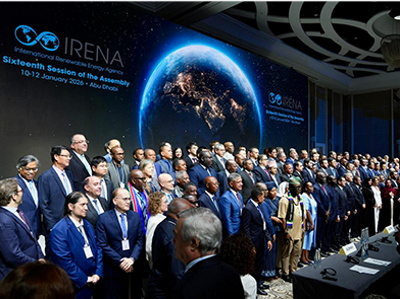
ABU DHABI, United Arab Emirates, CMC – The 16th session of the International Renewable Energy Agency (IRENA) Assembly has started here with the Dominican Republic’s Minister of Energy and Mines, Joel Santos Echeverría, noting the importance of green energy to the Caribbean.
“A clear, results-oriented approach will guide our presidency. We will seek to ensure that collective commitments translate into tangible and measurable benefits for our society,” said Echeverría, the Assembly’s president.
In a virtual address to the event, he said that for regions such as the Caribbean, the energy transition represents a strategic opportunity to strengthen resilience to climate change, reduce structural vulnerabilities, create jobs, empower communities, and promote truly sustainable development.
He said Santo Domingo will attach particular importance to the challenges and opportunities of the energy transition in the Caribbean.
Echeverría noted that the region is highly vulnerable to the impacts of climate change, including hurricanes, extreme weather events, and the growing accumulation of sargassum along our coastline, which pose serious threats to energy security, economic activity, and livelihoods.
“At the same time, the region holds a vast renewable energy potential, as well as opportunities to explore innovative solutions, including the possible energy use of Sargassum through research technology and overall international cooperation.”
He said the Dominican Republic’s presidency will promote the cross-cutting integration of emerging energy technologies within IRENA’s programmatic agenda and governance.
Echeverría said his country will also encourage the responsible use of tools such as artificial intelligence and other digital solutions to enhance planning, transparency, resource mobilisation, and institutional management, ensuring that IRENA remains at the forefront of the rapidly evolving energy sector.
The event, which ends on Monday, is being held under the theme “Powering Humanity, Renewable Energy For Shared Prosperity,” and Echeverría said it reflects a shared aspiration that the energy transition will drive equity, opportunity, and shared well-being.
“For this presidency, we reaffirmed our commitment to advancing global efforts to triple renewable energy capacity and double energy efficiency by the year 2030, prioritising ideas for concrete projects, effective technical assistance, and accessible and affordable financing.”
He said the Latin American and Caribbean family firmly believes that shared prosperity can only emerge when countries work together in a spirit of solidarity, cooperation, and shared responsibility.
“The Dominican Republic assumed this presidency with a clear vocation for dialogue, consensus building and collective action,” the energy minister said, adding that Santo Domingo will work closely with all IRENA members, the Secretariat and IRENA’s strategic partners to ensure that the Assembly represents a meaningful step toward a truly sustainable, resilient and inclusive global energy future.
The Assembly is being held days after President Donald Trump announced the United States’ withdrawal from 66 international organisations, many of them UN agencies, including IRENA.
“We assume this presidency at a decisive moment,” Echeverría said, adding that energy transition is no longer a future aspiration; it is an immediate necessity for developing countries.
“And particularly for small island developing states, this transition is inseparable from climate resilience, energy security, economic stability, and the fundamental right of our people for a sustained future.”
He said his country’s presidency for the IRENA assembly is centred on strengthening IRENA as an effective, responsive, and implementation-oriented institution that closely attends to the needs and priorities of its members.
“We will promote a more proactive and substantive engagement of all members, to consolidate the agency as a space for dialogue, cooperation, and action on renewable energy at all levels,” Echeverría said.
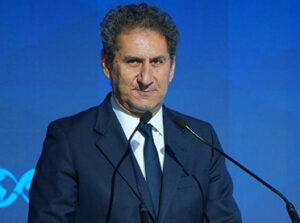
Meanwhile, IRENA’s Director-General, Francesco La Camera, said there was a record 1,524 participants at this year’s Assembly, representing 139 countries and the European Union, including 45 members represented at the ministerial level.
“In these turbulent times, when trust in multilateralism is being tested, your presence here today sends a powerful signal.
“We live in a world facing multiple, overlapping crises: geopolitical tensions, economic pressures, widening inequalities, and the three great planetary crises of climate change, biodiversity loss, and pollution.”
La Camera said these forces are disrupting natural systems, straining economic and social foundations, and eroding the quality of life.
“They are also fuelling a growing sense of injustice and a stronger demand for inclusion and fair participation in the creation and distribution of global prosperity. In short, the overall sustainability of our current development model is at stake.
Just as our economic and social systems are undergoing profound change, so too is the energy system that powers them.”
La Camera said the world is moving “from a centralised, fossil-fuel-based model to a more decentralised system built on renewable energy, including the sustainable use of biomass, and hydrogen, especially green hydrogen produced from renewable power”.
He said this is happening because the market has made its choice, noting that in 2025, 92% of newly installed power capacity was renewable.
“This year, we are heading toward another record, with nearly 700 GW of new renewable capacity expected. In just one year, we have installed twice the total nuclear capacity built over the past seventy years,” La Camera said.
He said there is a simple truth backed by every dataset and publication IRENA has delivered last year.
“Today, renewables are the most competitive way to generate electricity, beating fossil fuel alternatives on cost, resilience, and long-term stability.”
La Camera said renewables have claimed their dominance in the global energy landscape. “In the very near future, new investments in renewables plus storage will be more convenient and economical than keeping an old coal plant alive.”
He said this sustained growth places IRENA firmly at the centre of global energy scenarios, not as an observer, but as a reference point for policy, planning, and cooperation.
“This process is unstoppable, and nothing can reverse it,” La Camera said.
“It is time for countries to reinforce their renewable energy strategies, not only for climate action, but because renewables are the most resilient and no-regret economic pathway for development, security, decarbonisation, and competitiveness.
“The competitiveness of tomorrow’s economies will be largely determined by their ability to move electrons and molecules at the lowest possible cost, and to deliver clean, safe, and affordable energy services.”
La Camera said fast movers will gain lasting productivity and competitiveness advantages over those who hesitate. “Renewable energy is affordable, clean, and the foundation for industrial competitiveness and productivity,” La Camera said, noting that at its core, the energy transition is about people.
“Renewable energy must empower communities, support economic opportunity, and reinforce social stability,” La Camera said, adding that the IRENA assembly offers more than the opportunity to take stock.
“It offers the chance to recalibrate, to align ambition with implementation, and vision with delivery,” La Camera said.








 and then
  Assembly has started here with the Dominican Republic’s Minister of Energy and Mines)