
















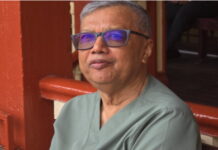

















ST. JOHN’S, Antigua, CMC – Antigua and Barbuda Ambassador to the United States, Sir Ronald Sanders, said Wednesday that the Government is aware of public concern following reports that citizens may, in limited circumstances, be required to post a visa bond when applying for a visitor visa to the United States.
In a statement, Sr Ronald said that it is important to clarify several points, noting that “no bond applies to holders of existing US visas” and that “those visas remain valid on their current terms.
He said while Antigua and Barbuda have been included in a US Visa Bond Pilot Programme, “this measure applies only to a very narrow category of new visa applicants who qualify under limited exceptions, while existing US visa restrictions remain in place.
“The bond does not apply to all travellers, and it does not guarantee or deny the issuance of a visa,” Sir Ronald said, adding that “it is essential for the public to understand the context in which this information emerged.
The diplomat said that no government on the list, including Antigua and Barbuda, was advised in advance of Washington’s announcement.
“Indeed, the announcement was made without prior notice, even to US Embassies accredited to the affected countries. This understandably contributed to uncertainty and concern, which the Government is now actively addressing through direct engagement.”
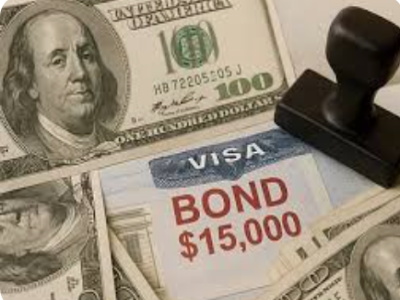
On Tuesday, the US State Department said Antigua and Barbuda and Dominica were the only two Caribbean Community (CARICOM) countries whose citizens will now have to post a bond of up to US$15,000 when applying for a visa to enter the North American country.
The US State Department said the measure comes into effect on January 21 this year, and the only other Caribbean country named is Cuba. The majority of countries whose citizens would need to post a bond are in Africa.
“Any citizen or national traveling on a passport issued by one of these countries, who is found otherwise eligible for a B1/B2 visa, must post a bond for $5,000, $10,000, or $15,000. The amount is determined at the time of the visa interview,” the State Department said in a statement.
“The applicant must also submit a Department of Homeland Security Form I-352. Applicants must agree to the terms of the bond through the Department of the Treasury’s online payment platform Pay.gov. This requirement applies regardless of place of application,” it added.
It said that the applicants should submit Form I-352 to post a bond only after a consular officer directs them to do so.
Applicants will receive a direct link to pay through Pay.gov. They must not use any third-party website for posting the bond. The US Government is not responsible for any money spent outside of its systems,” the State Department said, adding that “a bond does not guarantee visa issuance.
The State Department said that “as a condition of the bond, all visa holders who have posted a visa bond must enter and exit the United States through the designated ports of entry.
“Not doing this might lead to a denied entry or a departure that is not properly recorded,” it said, naming the port of entries as Boston Logan International Airport, John F. Kennedy International Airport, and Washington Dulles International Airport.
The State Department said that, in cases where the visa bond terms have been breached, the Department of Homeland Security will refer them to the US Citizenship and Immigration Services (USCIS) to determine whether a breach occurred.
Sir Ronald said that the United States authorities have indicated that the purpose of the bond is to encourage compliance with US immigration laws, particularly timely departure from the United States.
“In that context, we must be candid: there have been instances of overstays and charges on the US public purse, including unpaid hospital bills, by a small number of our nationals, and these actions create difficulties not only for the individuals concerned but for all Antiguans and Barbudans who travel legitimately.”
Sir Ronald said that on the instructions of Prime Minister Gaston Browne, he has “re-engaged directly with the US State Department at the highest levels” and that a formal diplomatic note has been submitted, setting out Antigua and Barbuda’s record clearly and firmly.
“That record shows that our country’s visitor overstay rate is consistently low, significantly below that of many countries not subject to bond requirements. We have also emphasized Antigua and Barbuda’s long-standing cooperation with the United States on immigration compliance and security matters.
“Our objective is straightforward: to ensure that Antiguan and Barbudan passport holders are treated no less favourably than nationals of other CARICOM countries, and that visa processing for our citizens continues on fair and reasonable terms.”
Sir Ronald said that discussions are ongoing to remove visa restrictions for legitimate travellers from Antigua and Barbuda.
“These negotiations were severe, measured, and persistent. While outcomes in international affairs are never guaranteed, there is room to hope that reason will prevail. The Government is working strenuously to correct this measure.
“In the meantime, we urge all citizens traveling abroad to respect immigration laws fully and to meet all personal obligations, as the conduct of a few can affect the many,” Sir Ronald said, adding, “The Government will continue to keep the public informed and remain fully engaged in defending the interests of Antigua and Barbuda and its people.






 and then