
















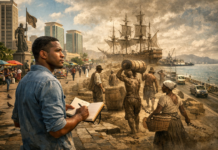














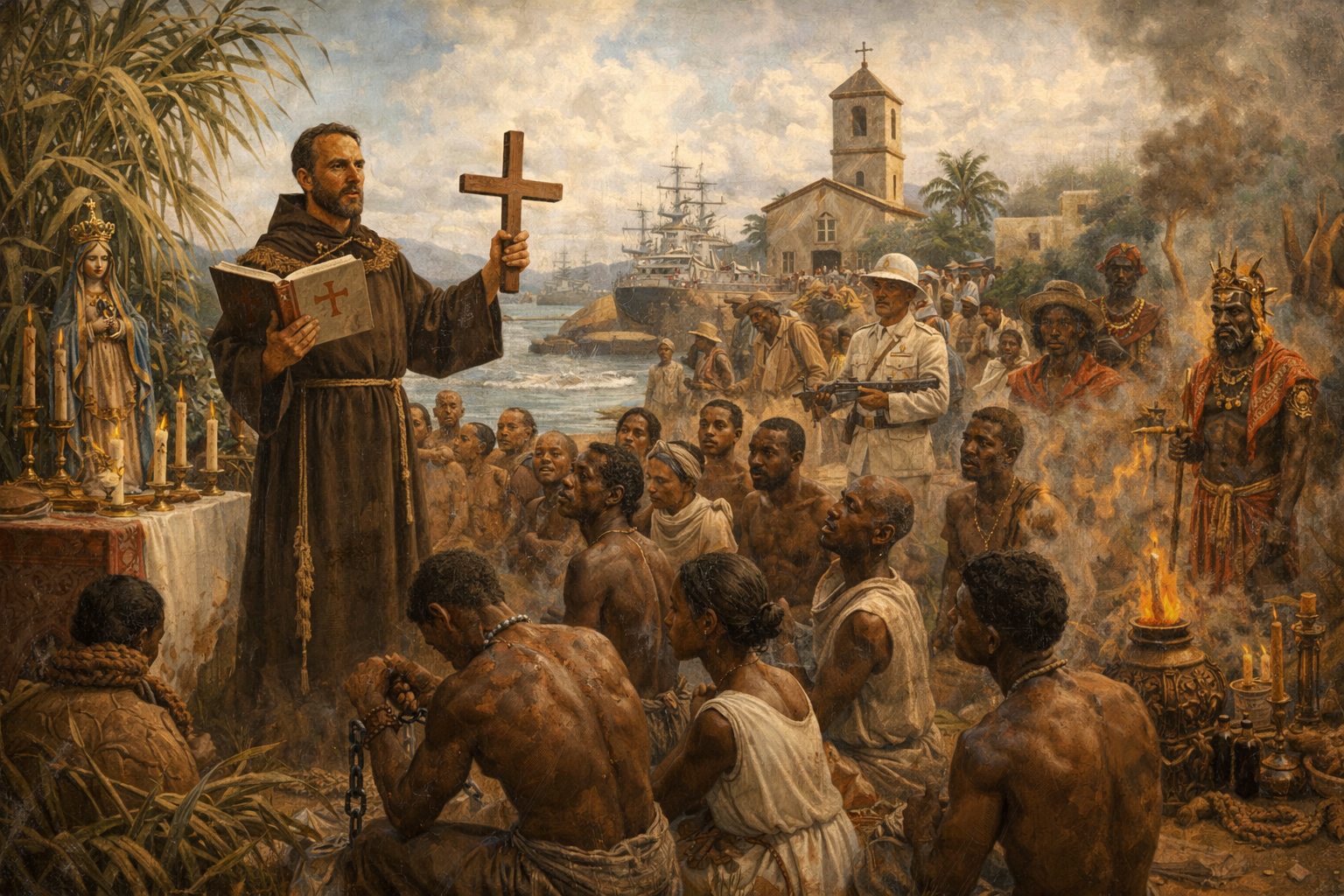
Religion came to the Caribbean on the same ships that carried conquest, trade, and forced migration. It arrived with wooden crosses and heavy books, spoken in unfamiliar tongues, held by men who believed salvation traveled in the shadow of empire. On the shores, drums already talked to the spirits, ancestors were already honored, and the land itself was sacred. Two worlds met, not gently, but permanently.
Missionaries preached beneath palm trees, promising heaven while condemning the old gods as darkness. Enslaved Africans were taught new prayers, often under threat, yet they listened with double ears. By day, they bowed their heads in churches built of stone. By night, they whispered to ancestors, blending saints with spirits, turning imposed religion into something their own. Christianity did not replace belief—it was reshaped by survival.
The Indigenous peoples felt religion as a loss first. Sacred caves were renamed, rituals forbidden, stories silenced. Yet fragments endured, hidden in symbols, herbs, and memory. The Caribbean became a crossroads of faith: African cosmology, European Christianity, and Indigenous spirituality folding into one another like tides colliding.
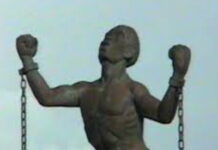
Church bells rang across plantations, marking time that did not belong to the workers who heard them. Still, religion became more than control. It became a comfort. Biblical stories of suffering and deliverance spoke deeply to those in chains. Moses leading his people to freedom sounded familiar. Jesus, persecuted and executed, felt close.
Over generations, religion in the Caribbean transformed. It danced, sang, shouted, and mourned in rhythms the missionaries never taught. Revival meetings, Rastafari reasoning, Vodou ceremonies, Shango rituals, and Catholic processions all carried echoes of resistance and hope. Faith became a language of endurance.
When religion arrived in the Caribbean, it came as a tool of power. But it stayed because the people claimed it, reshaped it, and made it speak with Caribbean breath. In doing so, belief became not just a path to heaven, but a way to survive on earth.








 and then