


































No one remembered the exact day religion arrived, only the moment the world stopped speaking with one voice.
Before that, people argued, loved, traded, and feared together. Storms were storms, death was death, and meaning was something you searched for quietly, inside yourself or in the shared firelight of others. Then the Interpreters appeared.
They did not come with weapons. They came with answers.
They said the universe had a will, that suffering had a purpose, and that obedience was love. They named the invisible and gave it rules. At first, people felt comforted. Fear shrank when wrapped in certainty. Chaos softened when someone claimed it was planned.
But the answers multiplied.
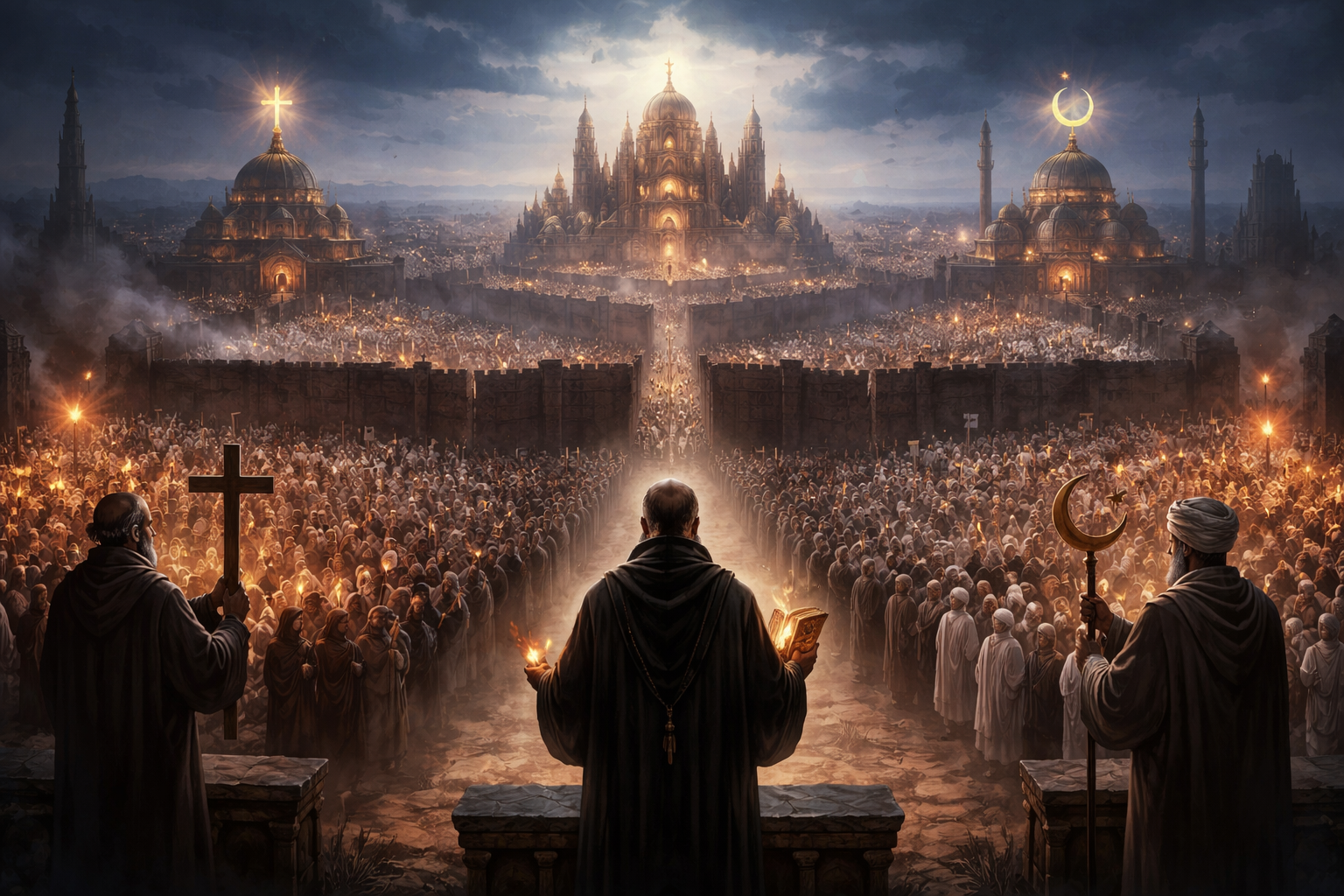
One Interpreter said the will demanded purity. Another said sacrifice. Another said silence. Each built symbols, stories, boundaries. The people gathered into circles, then into walls. Belief became a password. Doubt became a crime.
Soon, neighbors stopped asking how you are and started asking what you believe.
Those inside the walls were “chosen.” Those outside were “lost.” Control grew gently, like ivy—through rituals, through guilt, through the promise of reward beyond life. Children learned doctrine before language. Leaders learned that fear traveled faster when it wore the guise of holiness.
Wars no longer needed land or gold. They required only certainty.
The tragedy was not faith itself, but ownership of it. The moment belief became law, compassion shrank. The moment questions were forbidden, power settled in. Humanity fractured not along borders, but along truths that refused to bend.
Centuries later, among the ruins of temples and texts, a child once asked, “What if the divine never wanted to be obeyed?”
The elders had no answer.
And in that silence, something ancient stirred—an idea older than religion itself: that meaning could unite instead of divide, and that control had never been sacred at all.









 and then