





































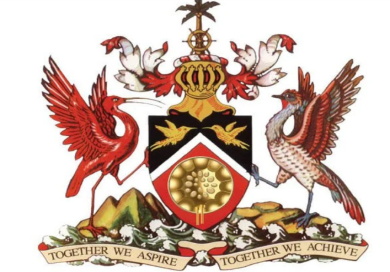
PORT OF SPAIN, Trinidad, CMC – Pan Trinbago has expressed its ‘deep disappointment” at the decision of the Trinidad and Tobago government to extend the use of the existing coat of arms until January 2, 2031, despite the approval of a new national emblem earlier this year.
“This decision comes despite the National Emblems of Trinidad and Tobago (Regulation) (Amendment) Act 2025, unanimously supported by both the Government and Opposition, having been fully passed, assented to, and proclaimed into law in February 2025,” Pan Trinbago said in a statement.
The new coat of arms was unanimously approved in the House of Representatives on January 13, featuring a gold steelpan and pansticks where Columbus’s ships were, with the then-Keith Rowley government saying the change was part of the effort to remove “painful colonial vestiges of our past”.
The Ministry of Homeland Security issued the legal notice for the extension, with the Government indicating that the order made under the new legislation allows the minister to prescribe a later date for the continued use of the national emblem.
The act initially allowed the previous one to remain in effect until January 1, 2026, or until a later date set by ministerial order.
Finance Minister Davendranath Tancoo, who in June had ordered the Central Bank of Trinidad and Tobago to halt printing of the new TT$100 polymer bill, which features the redesigned coat of arms, said that a phased transition was unavoidable.
He said that, given the sheer scale of changes required across the public service, state agencies, and Trinidad and Tobago’s overseas missions, it could not be done. He insisted that the issue is not symbolism but logistics, planning, and fiscal responsibility.
“There are common-sense reasons for having a transition period. There are millions of dollars’ worth of signage in every single government office in the country and embassies abroad, millions more in stock of letterhead, passes, stamps, and seals,” Tancoo said, adding that the process goes far beyond stationery and signage and reaches into the most complex and costly areas of state operations.
“All currency has to be changed, including coins, which have to be minted. Obviously, a transition is practical so that the old is gradually replaced by the new. There is absolutely nothing clandestine about it,” he said.
He accused the former Government of approving the redesigned emblem without creating a roadmap for its implementation.
“The PNM approved a new Coat of Arms but made no guidelines for transition, no time frame for when the old Coat of Arms will be retired. In fact, the PNM did not even make provisions to pay the designer for the new design that they were using,” Tancoo said, praising Prime Minister Kamla Persad-Bissessar for introducing a structured and transparent approach, one that sets a clear deadline for the eventual complete conversion.
But the leader of Opposition Business, Marvin Gonzales, questioned the Government’s move.
“Why has the new Coat of Arms disturbed the sensitivity of the Government? Why did the national instrument of Trinidad and Tobago offend this country’s leadership that, in the midst of the Christmas preparation, a mysterious Legal Notice was published, delaying the use of the new Coat of Arms?”
Gonzales also questioned whether it was an attack on this country’s primary cultural symbol.
“Why believe that the people of Trinidad and Tobago are fools? Is that the reason why sponsorship of major steel bands has been denied or suspended? Is this now the latest blatant attack on the cultural symbol of our national community? This country is being led by extremist hatred and dark revenge,” he said.
In its statement, Pan Trinbago said that it stood “proudly behind this historic amendment, which represented a monumental stride in cultural recognition, national identity, and post-colonial transformation.
“The removal of the ‘three ships’ and the elevation of the Steelpan, a creation born from the ingenuity, resilience, and creativity of the people of Trinidad and Tobago, signalled a future in which national symbols reflect our authentic story.
Pan Trinbago President, Beverly Ramsey-Moore, said that the decision to implement “contradicts the unity and resolve demonstrated earlier this year, when both sides of the House unanimously agreed that the Steelpan deserves its rightful place on the prestigious national emblem.
“We are deeply disappointed. Both the Government and Opposition stood shoulder to shoulder in support of the amendment. It was debated, scrutinized, passed, assented to, and proclaimed.
“To now defer implementation to 2031 sends an unfortunate message, not only for the Steelband community, but to every citizen who celebrated this long-awaited moment of national pride,” Ramsey-Moore said.
She said that Pan Trinbago’s position is not “adversarial, but rooted in the responsibility to protect the legacy of the national instrument and the cultural movement it represents.
‘The Steelpan is more than an instrument, it’s an industry, a cultural bridge, a symbol of unity and innovation. We owe it to our pioneers, our youth, and the global Steelpan fraternity to ensure that the decisions made in Parliament are fully honoured,” she added.









 and then